Fewer consumables
A lower metabolic rate could reduce demand for food, oxygen, water, and waste processing during the long cruise between planets.

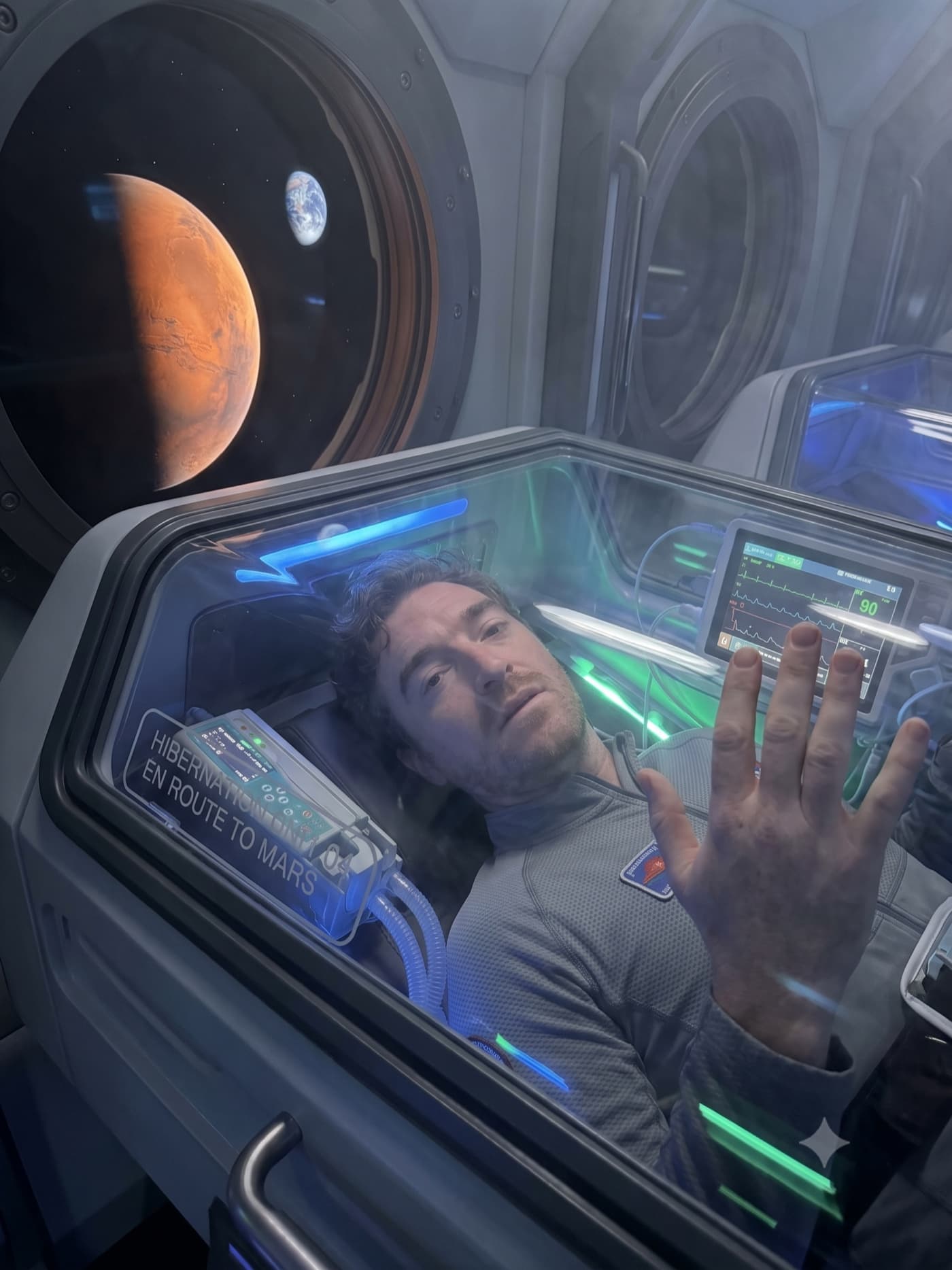
Perhaps one day, but not today. Scientists are studying whether a controlled torpor-like state could lower metabolism, protect the body, and shrink the systems needed for long voyages. Human space hibernation has never been demonstrated.
Sleep changes awareness. Torpor changes the operating level of the entire body: metabolism slows, temperature can fall, heart and breathing rates decline, and energy use drops. Natural hibernation is a repeating pattern of long torpor bouts and brief arousals.
Synthetic torpor means trying to induce part of that biology in a species that does not normally hibernate. It is also different from cryogenic freezing: the person remains alive, perfused, monitored, and metabolically active at a lower level.
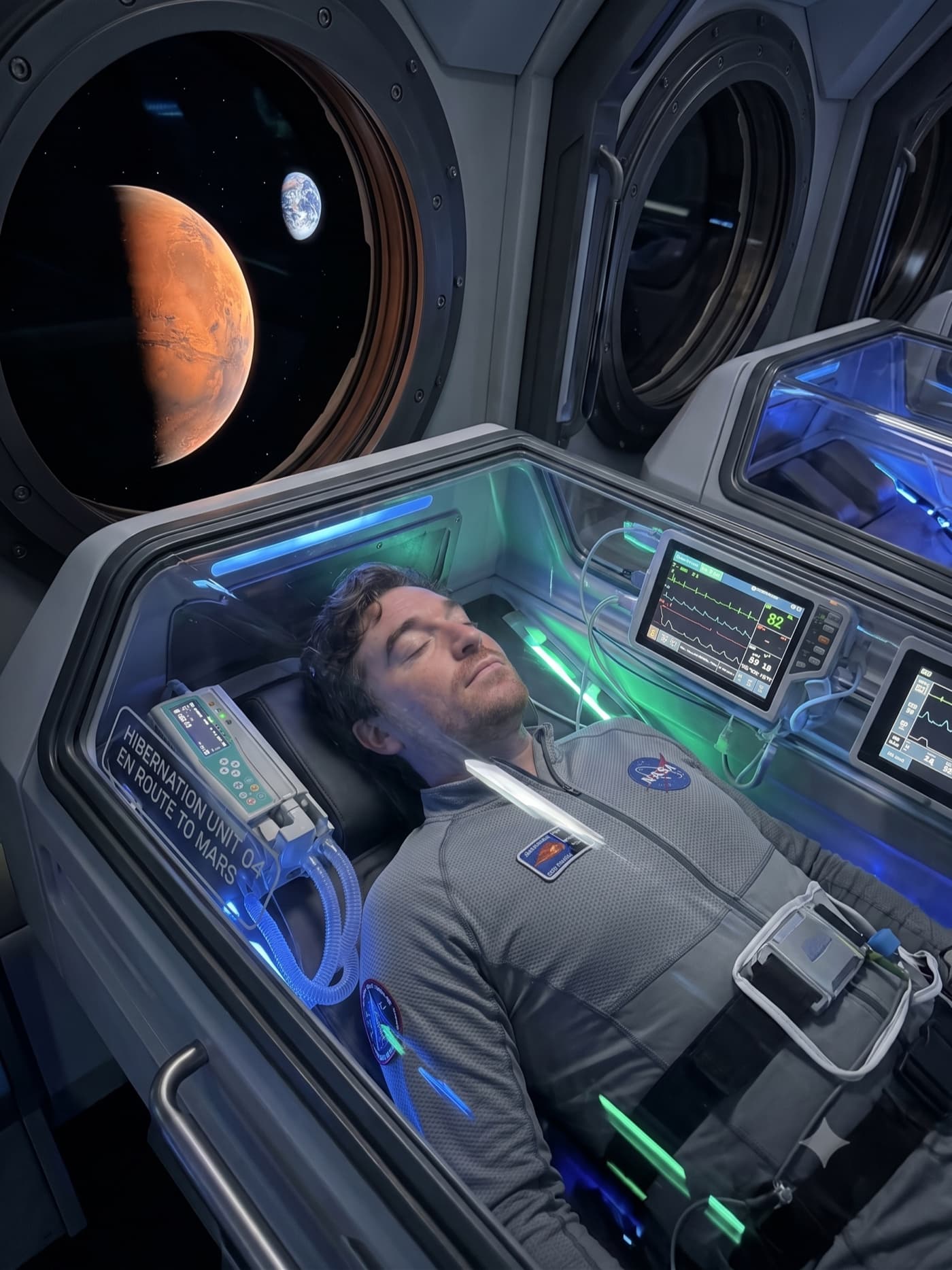
The distinction matters because only the first two have been experienced by people.
These are potential system benefits from research studies, not promises for a future mission.
A lower metabolic rate could reduce demand for food, oxygen, water, and waste processing during the long cruise between planets.
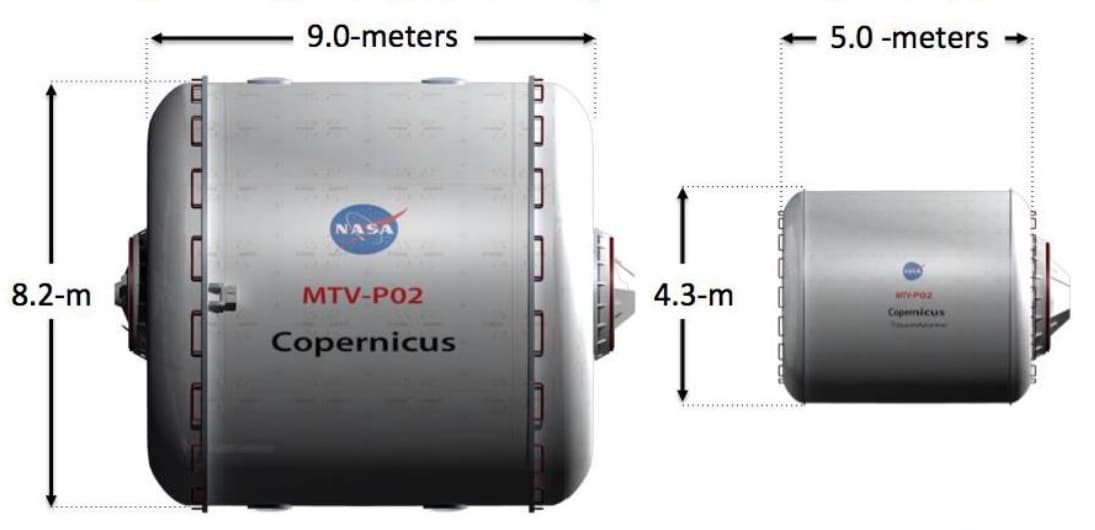
Sleeping crew would need less active living space. ESA studies found a hibernation architecture could reduce spacecraft mass by roughly one-third in a conceptual Mars mission.
Water, food, and other supplies could be arranged around compact pods, concentrating radiation shielding where the crew spends most of the voyage.
Long periods of isolation, monotony, and interpersonal strain might be reduced, though repeated torpor would create new psychological and medical challenges.
A recumbent crew could make a small rotating system more tolerable because sleeping occupants would not move their heads through a strong Coriolis environment.
Hibernating animals show intriguing resistance to muscle loss, bone loss, and radiation injury. Scientists still have to learn whether humans could gain any of those protections.
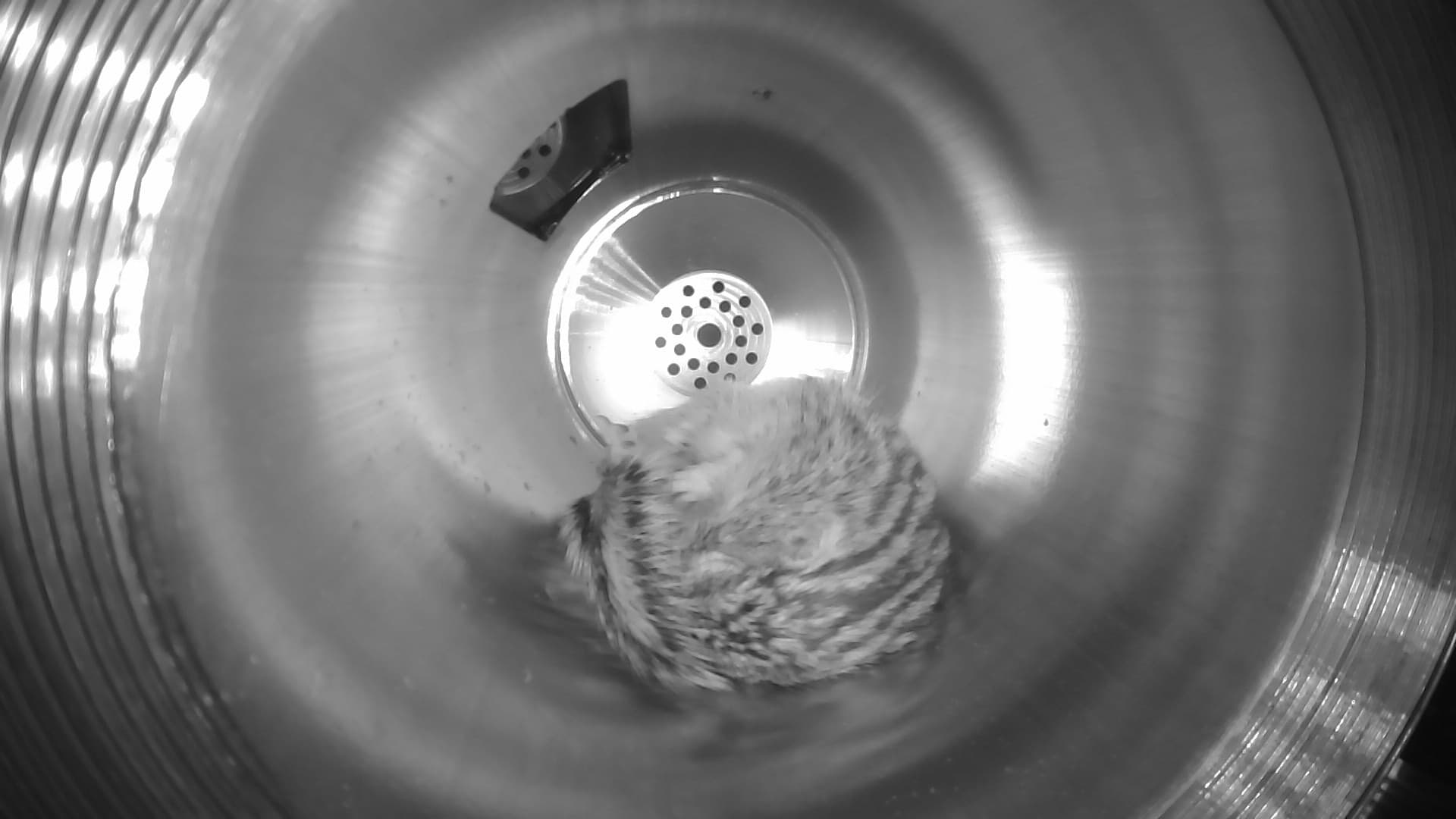 NASA / Ashley Hermans and Ryan Sprenger
NASA-funded researchers proposed the Studying Torpor in Animals for Space-health in Humans laboratory to make hibernation research possible in microgravity. The hardware is designed to fit within an ISS biological incubator and support both natural hibernators and non-hibernating laboratory animals.
STASH is a research concept and development path. It is not a human hibernation pod or an operational Mars system.
ESA compared a conventional Mars habitat with a smaller hibernation module and estimated roughly one-third lower spacecraft mass in its concept study. SpaceWorks studied rotating schedules in which crew members would spend limited periods in medically induced torpor rather than one uninterrupted six-month sleep.
The apparent simplicity of a row of pods is deceptive. Every pod is also an intensive-care room, radiation shelter, life-support node, restraint system, exercise countermeasure, and emergency escape problem.
Researchers are testing several pathways, each at a very different level of maturity.
Cooling systems and sedatives can reduce human temperature and metabolism in critical care. Extending that controlled state from hours or days to repeated weeks is unproven.
Animal studies target brain pathways that regulate heat production, heart rate, and energy use. A reversible drug suitable for healthy astronauts does not yet exist.
Researchers have induced torpor-like hypothermia in rodents by stimulating the brain's preoptic area with ultrasound. Translation to people remains a distant question.
Instead of putting the whole body into torpor, future drugs might copy individual protective mechanisms found in hibernators, such as preserving tissue or controlling inflammation.
A viable system would need hospital-grade care with spacecraft-grade autonomy and redundancy.
Closed-loop cooling and warming with redundant sensors
Continuous heart rhythm, blood pressure, glucose, and clot monitoring
Airway support, oxygen delivery, carbon-dioxide removal, and ventilation
Carefully controlled fluids and nutrients with infection-resistant access
Electrical stimulation, loading, or compact artificial gravity
Automatic detection, safe arousal, robotic assistance, and an awake caregiver
Most of the remaining barriers are biological and medical, not cinematic pod design.
Humans lack the evolved switches that let true hibernators cool, suppress metabolism, preserve organs, and wake repeatedly without injury.
Lower temperatures can weaken immune responses. Long-term catheters, breathing support, and confined spacecraft systems create additional infection pathways.
Prolonged inactivity and intravenous lines can raise clot risk, while cooling can also alter normal coagulation. Both sides of that balance must be controlled.
Temperature, glucose, and electrolytes affect cardiac stability. Waking a crew member safely may be harder than placing them into a suppressed state.
A person still needs energy, fluid, and waste removal. Months of artificial feeding and reduced gut activity have not been validated in healthy people in space.
A torpor spacecraft must diagnose problems and care for incapacitated people with long communication delays and no nearby hospital.
Study how animals preserve muscle, bone, organs, and DNA while metabolism is suppressed.
Use animal hardware such as the proposed STASH laboratory to learn whether protection survives in space.
Establish safe duration, induction, nutrition, monitoring, and rewarming through tightly controlled clinical research on Earth.
Demonstrate autonomous pods, fault recovery, radiation sheltering, and rotating crew schedules before any deep-space use.
Human torpor would need the same evidence, redundancy, and escape planning expected of every life-critical spacecraft system.
The goal is not to imitate science fiction. It is to discover whether biology can become part of the spacecraft: lowering demand, preserving health, and helping humans survive journeys that currently ask too much of both bodies and machines.
This page distinguishes current medicine and laboratory evidence from proposed mission architecture.