Human Exploration
Moon Habitat Builder
Design safe places for explorers to live and work beyond Earth.


Rebuilt as a flexible publishing platform so your team can launch a richer, more modern version of the original page without touching code unless you want to.

Curiosity lands in an imagined 1920s New York. Watch two short films and follow the rover's first mystery in a film-noir comic story.
Enter Curiosity Noir →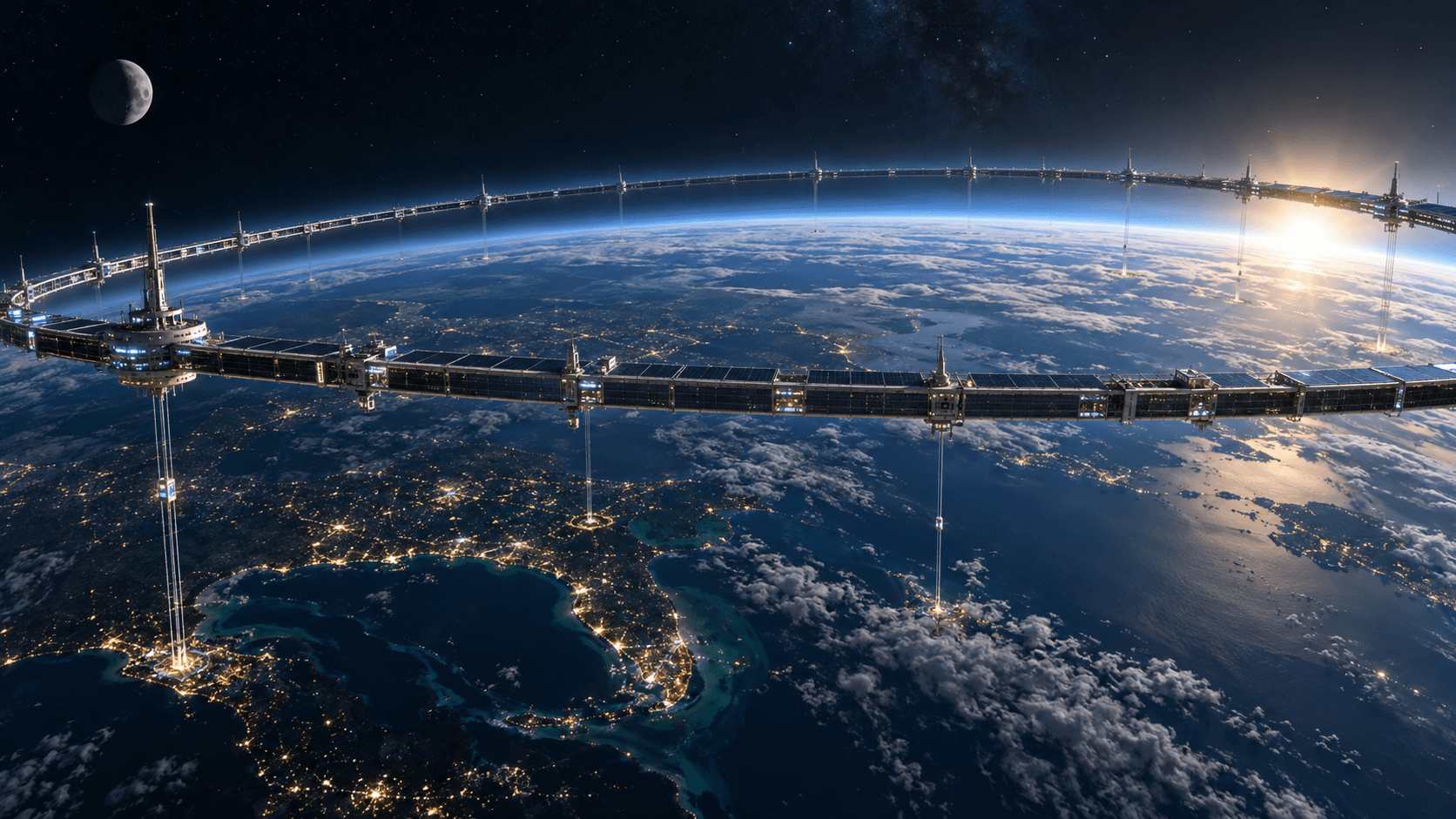
Explore how an actively supported ring around Earth could make space travel, global transport, clean energy, and research available on a new scale.
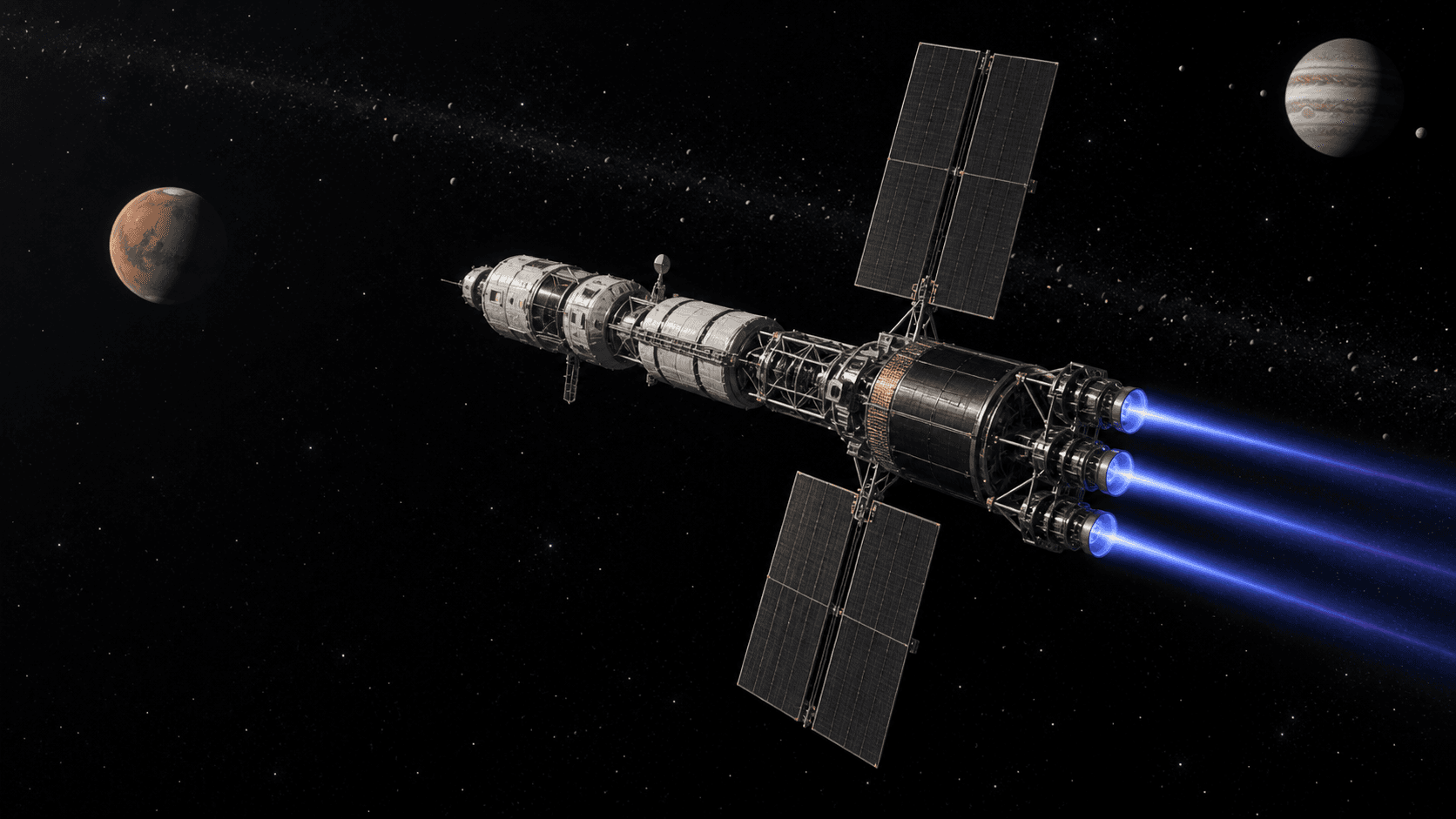
See how nuclear-electric ion propulsion could move massive human spacecraft toward Mars, Jupiter, and Europa with sustained, fuel-efficient thrust.
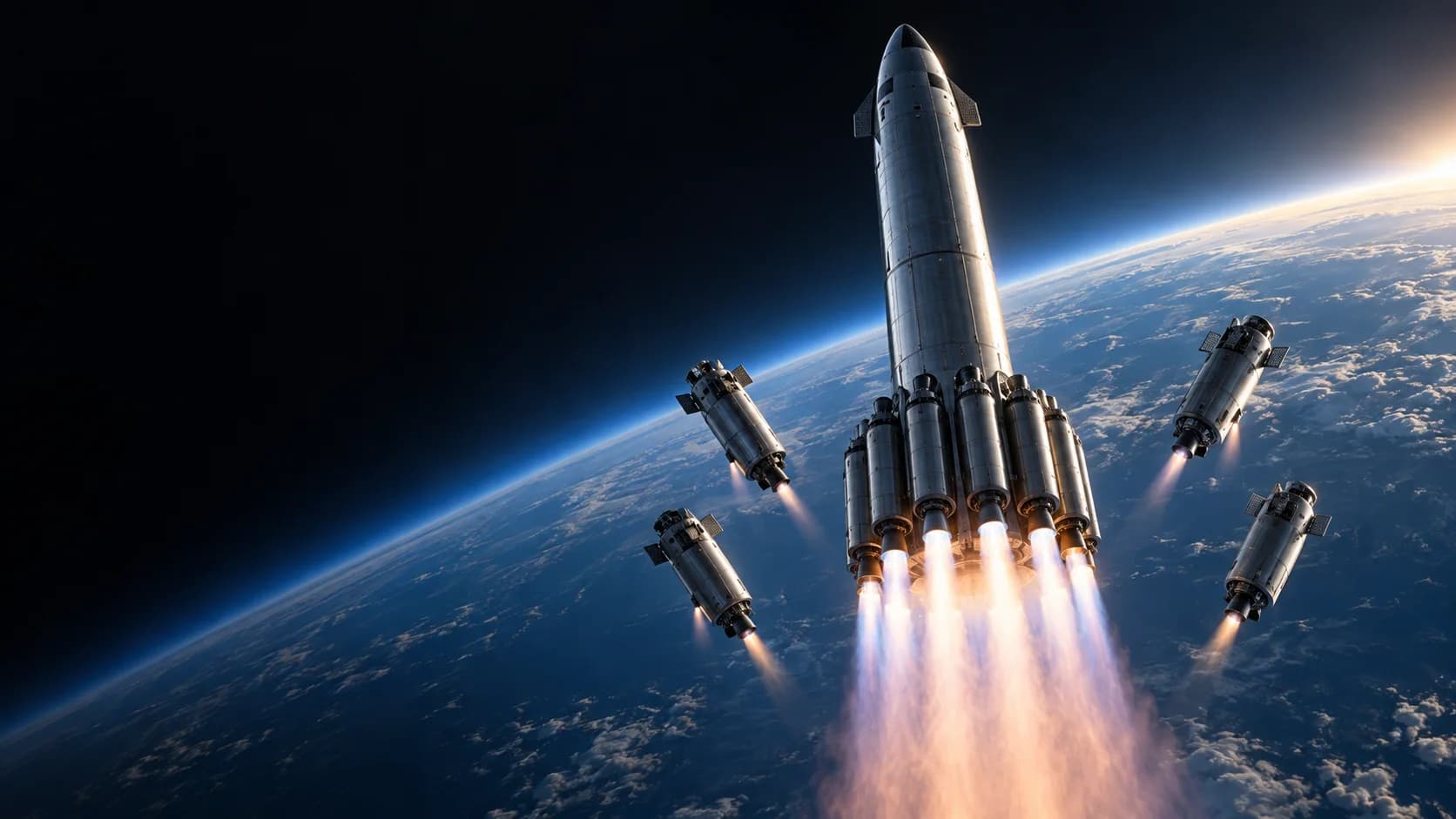
Explore a speculative launch architecture that replaces one giant booster with detachable engine-and-tank modules.
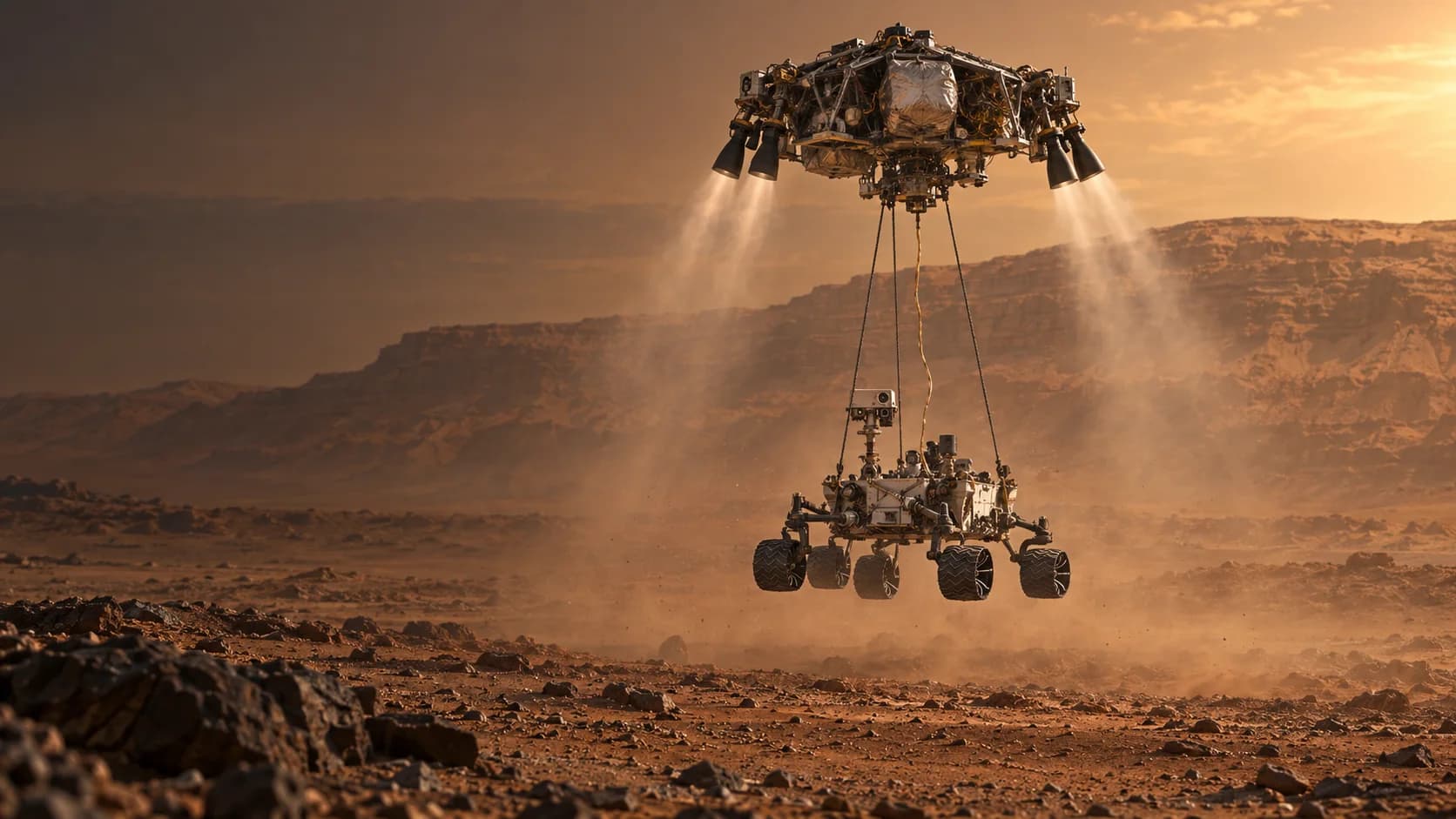
Explore the one-ton rover from wheels to laser—and the rocket-powered Sky Crane that lowered it onto Mars.
The latest pages, games, and interactive experiences added to the site.
Watch Curiosity descend into an imagined 1920s New York, then follow its first mystery through film-noir comic panels.
See how an actively supported ring could turn orbit into shared transportation, energy, research, and disaster-response infrastructure.
Follow NASA's funded race to reawaken, reboost, and reuse Skylab—and the schedule gap that doomed the rescue.
A speculative architecture with 39 detachable propulsion pods, sequential staging, and autonomous swarm recovery.
Explore the rover’s wheels, arm, power, computers, and 10 science instruments—then see how the Sky Crane delivered it to Mars.
Read NASA request 26-00719-F-JSC, its no-records determination, and an orbital-mechanics check of the Space Shuttle capture theory.
Choose the right NASA office, define a searchable set of records, control fees, copy a proven request structure, and track the response.
Explore the engineering leadership behind Explorer 1, Marshall, and Saturn V—and the Nazi-era forced labor history that makes his legacy impossible to simplify.
Compare chemical and nuclear-electric propulsion, explore continuous-thrust routes, and see what it could take to carry humans to Mars and Europa.
Could someone livestream from Mars? Follow the delayed signal from a surface camera to relay orbiters, Earth antennas, and viewers at home.
How a nuclear stand-off pulse could move a dangerous asteroid, why fragmentation is risky, and why early detection remains Earth's best defense.
What torpor really is, why mission designers care, what NASA is studying, and why humans are not ready to sleep to Mars.
Create and download an honorary mission badge for the NASA role you would choose.
How laser arrays on Earth could push light sails, energize spacecraft, and open faster routes through the Solar System.
A new aspiring NASA employee profile connecting space interest, government contracting exposure, and mission-aligned business experience.
Every official NASA account on X, Instagram, YouTube, TikTok, Facebook and more — plus all 10 NASA centers.
The honor NASA astronauts give to the people who keep them alive. Only 1% qualify each year. The pin has actually been to space.
Sea Dragon. Project Orion. X-33. DC-X. The rockets and spacecraft NASA designed, tested, and almost flew but never launched.
Real-time articles from NASA, SpaceX, ESA, and more. Filtered by mission, science, launches, and technology.
What if NASA redesigned their logo every decade? Ten eras, one iconic mark.
Watch the International Space Station pass over Earth in real time with live telemetry.
Guide a capsule into soft capture using thruster controls and careful alignment.
Fly a Starship through ascent and hit every waypoint needed to reach parking orbit.
Simulate deep-space message delay, signal travel, and AI-assisted packet optimization.
Aim a message toward distant worlds and see if your signal holds across the cosmos.
A deep dive into the concept of a hopper exploring the icy moon of Jupiter.
Turn a research question into a precise records request. Find the right office, set a fee limit, use a copyable template, and understand what happens after submission.
Open the FOIA GuideFollow NASA's funded race to reawaken, reboost, and reuse America's first space station—and the schedule gap that doomed the rescue.
Open the case fileThe original request, NASA's no-records determination, a permanently redacted public PDF, and a careful look at what the response—and the orbital mechanics—actually establish.
Open the case fileStudents, kids, adults, and lifelong dreamers can add themselves to the honorary crew and share the NASA role they would choose to help preserve life and keep the light on for future generations.
Design safe places for explorers to live and work beyond Earth.
Study Earth from space so people can protect life at home.
Keep missions connected as they travel farther into the unknown.
NASA exists to preserve life by expanding what humanity understands about Earth, space, technology, and the fragile systems that keep us alive. Every mission is part of a longer promise: to learn enough, build enough, and share enough so future generations inherit more possibility than fear.
The work is not only exploration for its own sake. It is a duty to keep the light on, not just for ourselves, but for everyone who comes after us.
Study Earth, protect knowledge, and develop capabilities that help humanity endure.
Carry discovery forward so the next generation receives tools, truth, and hope.
Make decisions for people we may never meet, but whose lives depend on what we safeguard today.


Life at NASA is shaped by purpose, passion, and dedication to a cause larger than any one person. The daily work can be technical, administrative, creative, operational, or scientific, but underneath it is the same commitment: preserve life, expand knowledge, and keep the light on for those who come after us.
People come together across disciplines because the mission demands more than talent. It asks for care, patience, rigor, humility, and the willingness to serve a future most of us will never personally see.


Take a break with a Flappy Bird-style Starship mini-game and chase a new high score.
Add yourself to the mission and imagine your dream role helping NASA protect life.
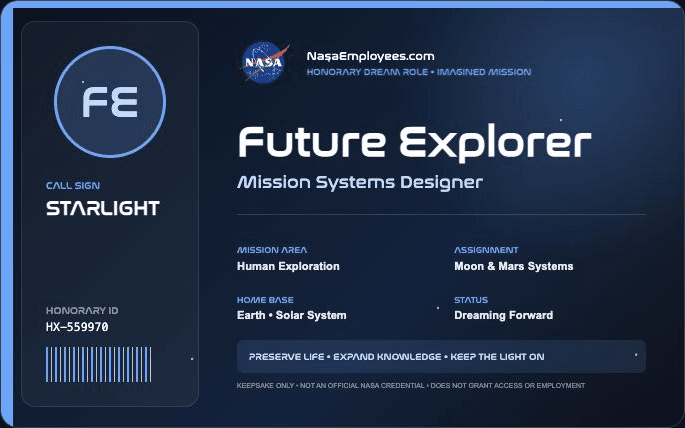
Generate and download a personalized honorary badge for the NASA role you would choose.

Understand the mission-critical foundation that guides NASA's most important decisions.

Learn how women have shaped NASA's history and continue to carry the mission through science, engineering, leadership, and spaceflight.
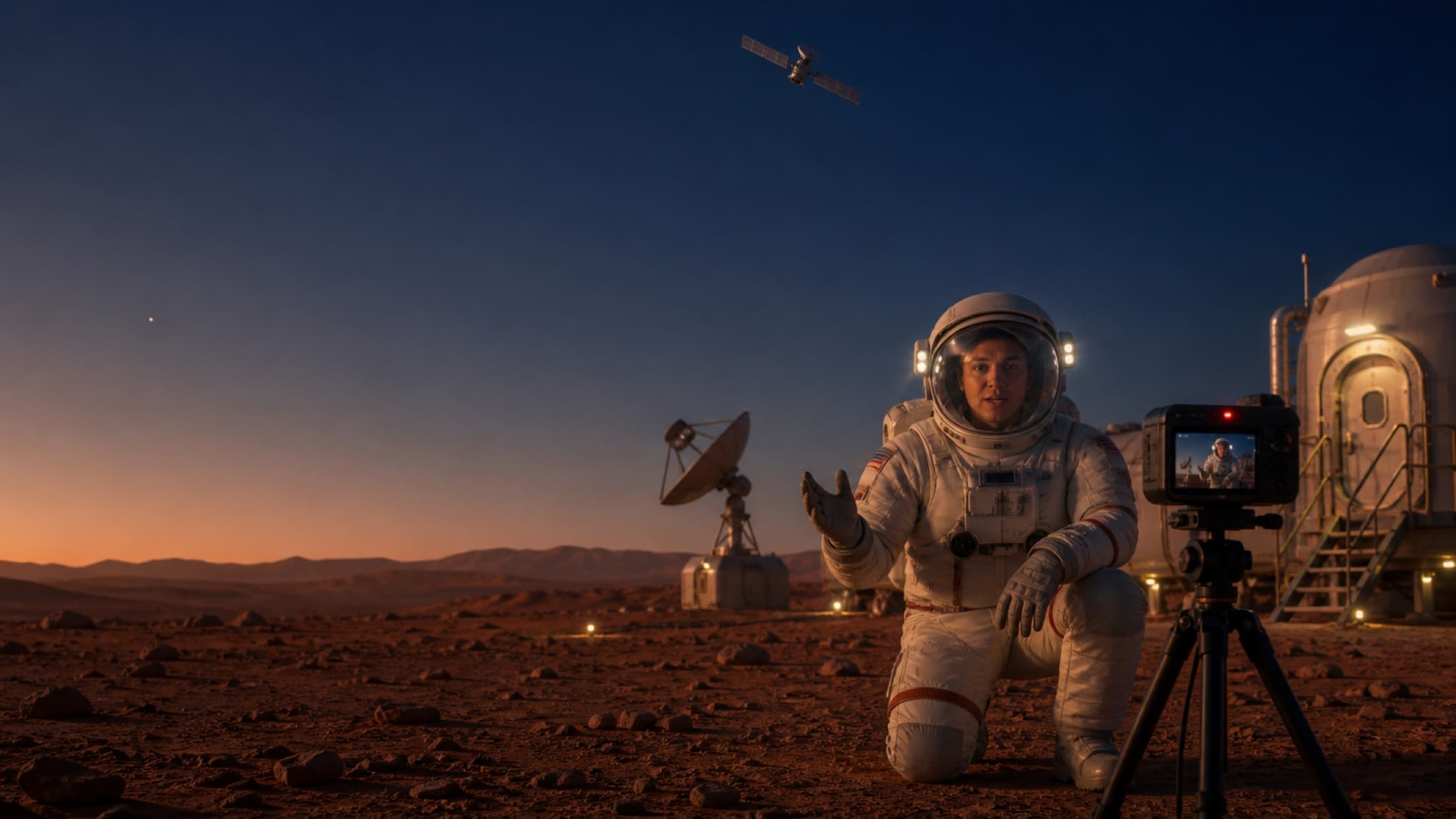
See how a delayed livestream could travel from a Mars camera through relay orbiters to viewers on Earth.
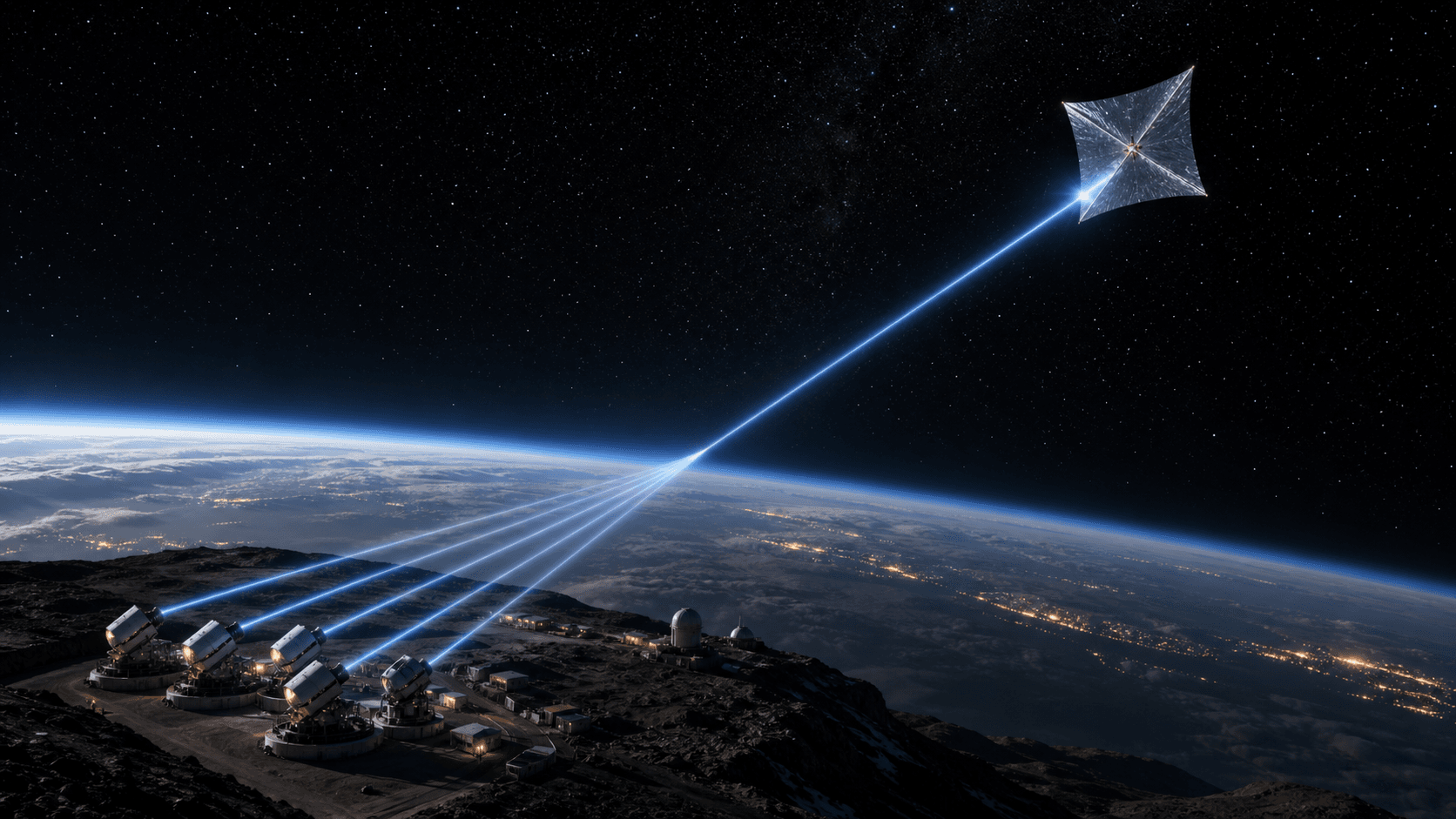
See how Earth-based laser arrays could push light sails, heat propellant, and power future spacecraft from far away.
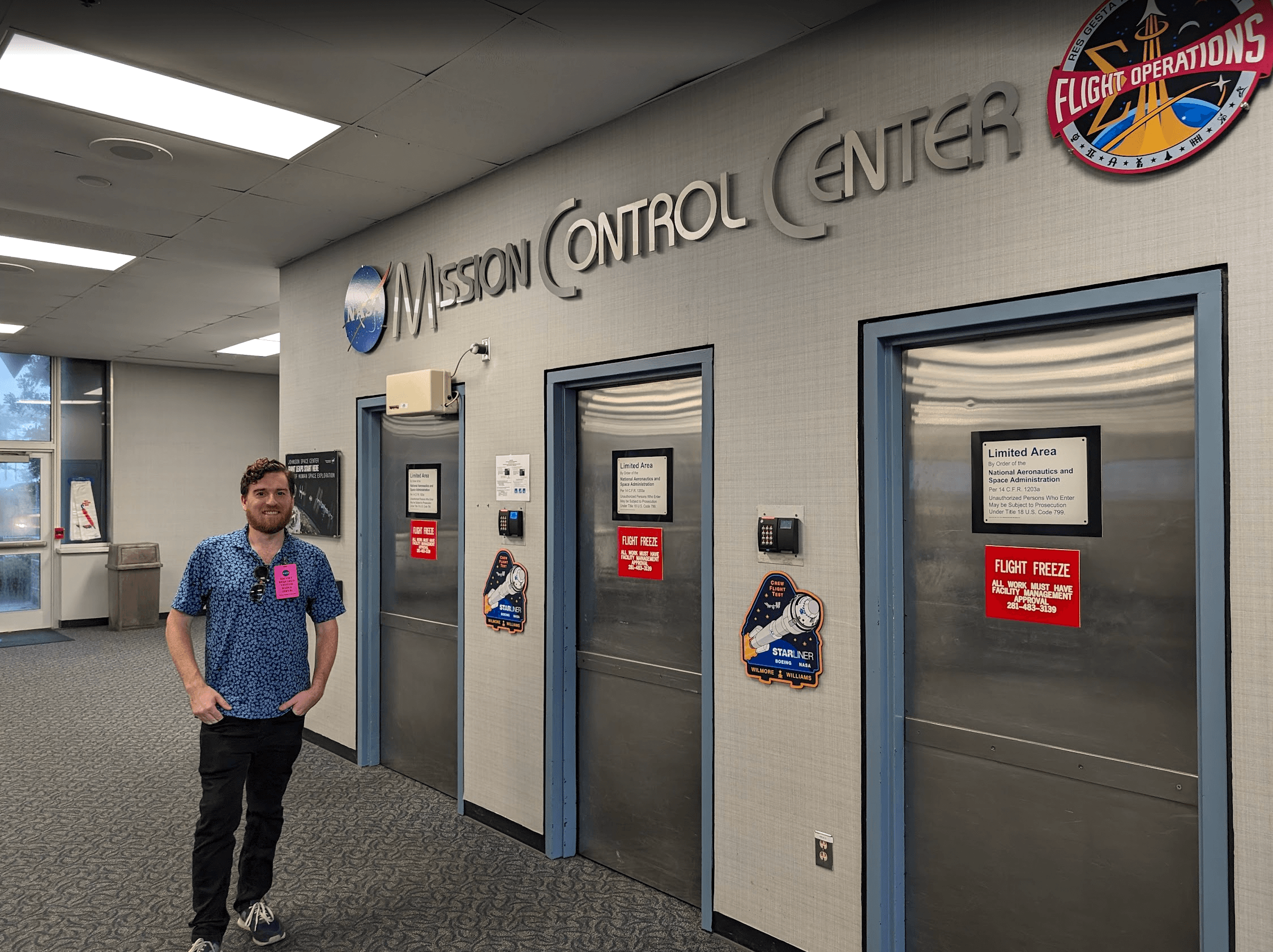
Meet aspiring NASA employee Jim Washkau through a profile page focused on space interest, government contracting exposure, and mission-aligned business experience.

See how water, coffee, juice, and rehydrated drinks work in microgravity.
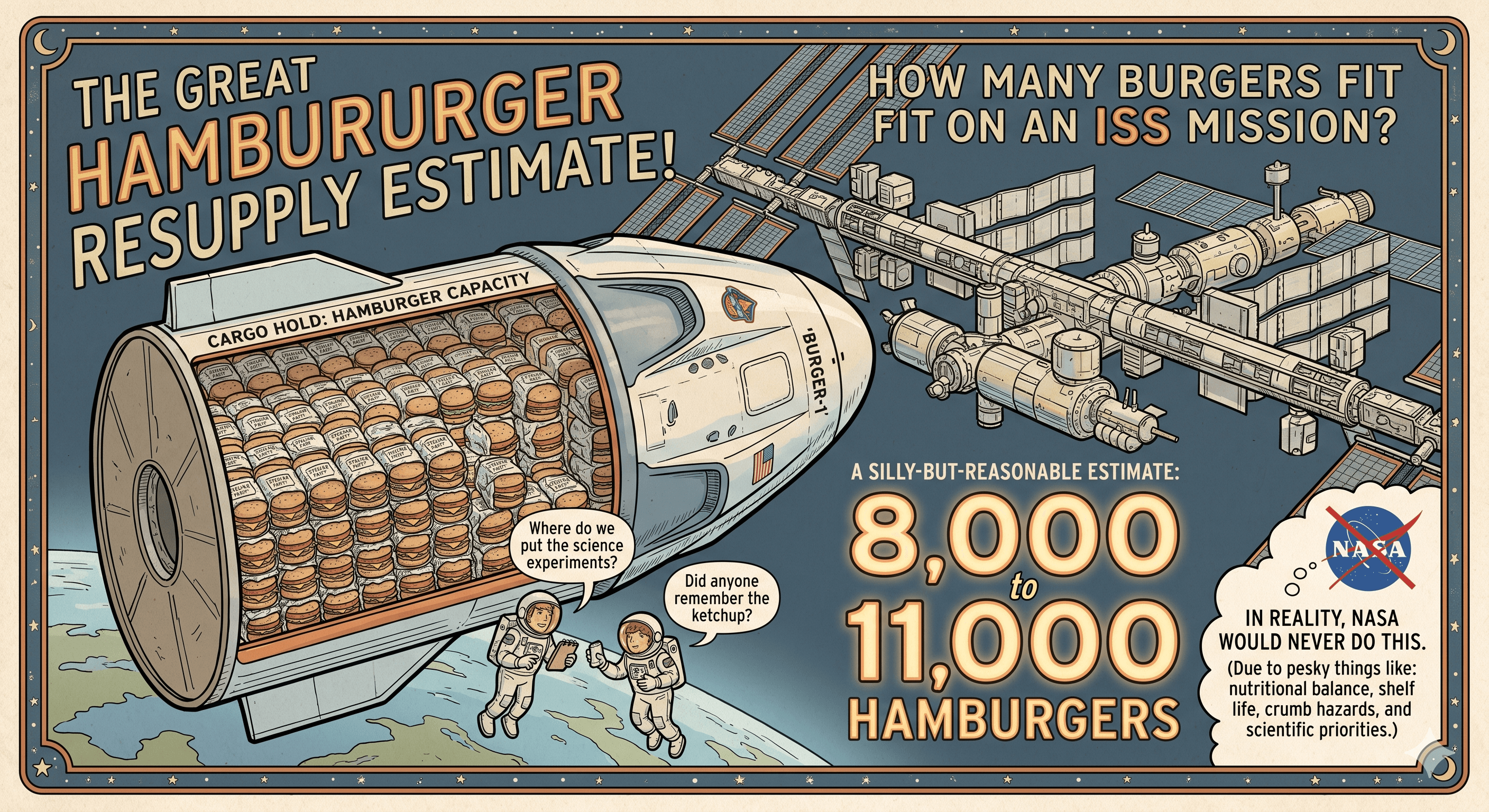
Plainspoken answers to weird space hypotheticals, starting with soda, urine, and recycled water.
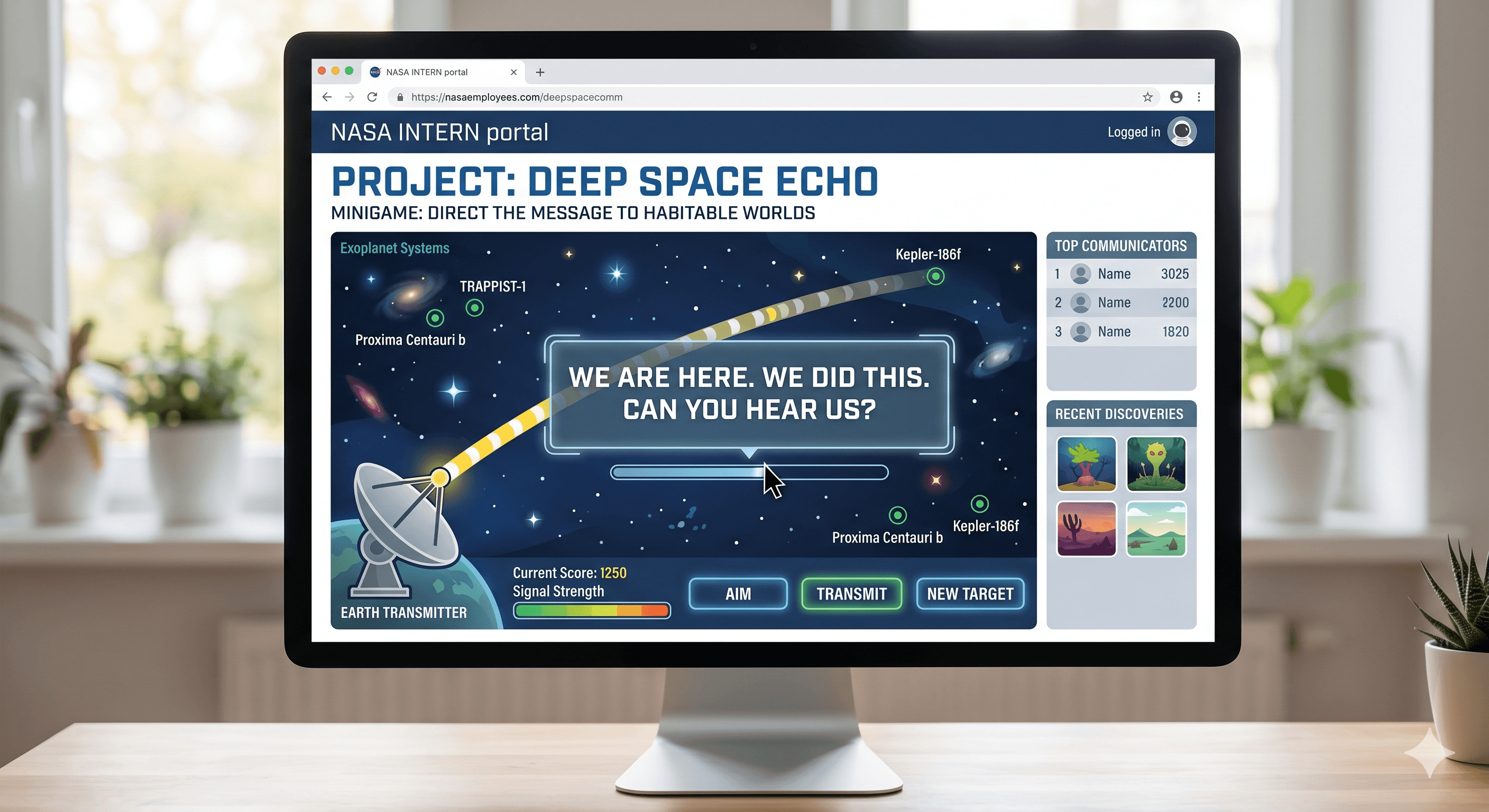
Aim a message from Earth toward distant worlds that scientists study as potentially life-friendly and see if your signal holds.
Guide a Starship through a simple ascent path and hit every waypoint needed to reach parking orbit.

Simulate deep-space message delay, signal travel, and AI-assisted packet optimization.
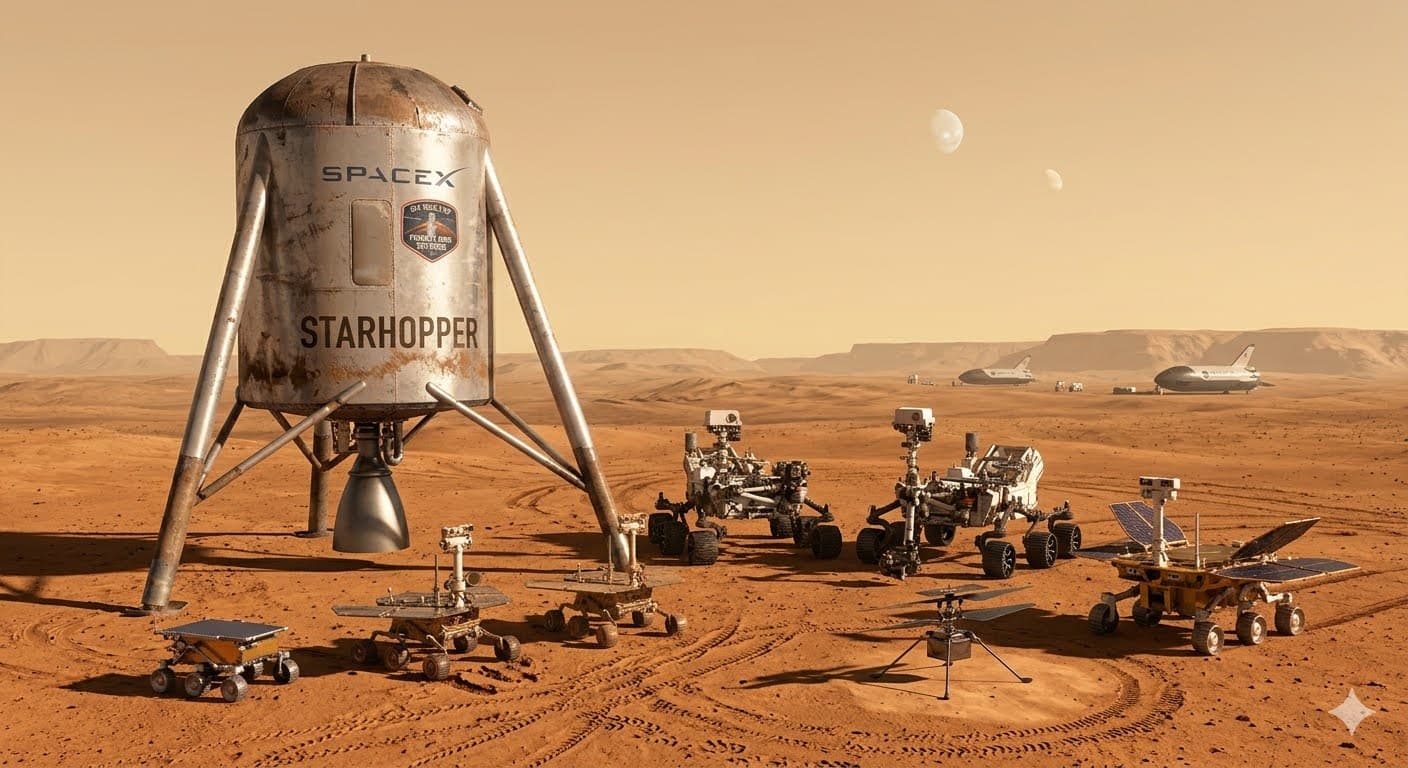
A future-facing concept about rover heritage, Starhopper symbolism, and humanity's perseverance.

Guide a capsule into soft capture using tiny thruster controls and careful alignment.
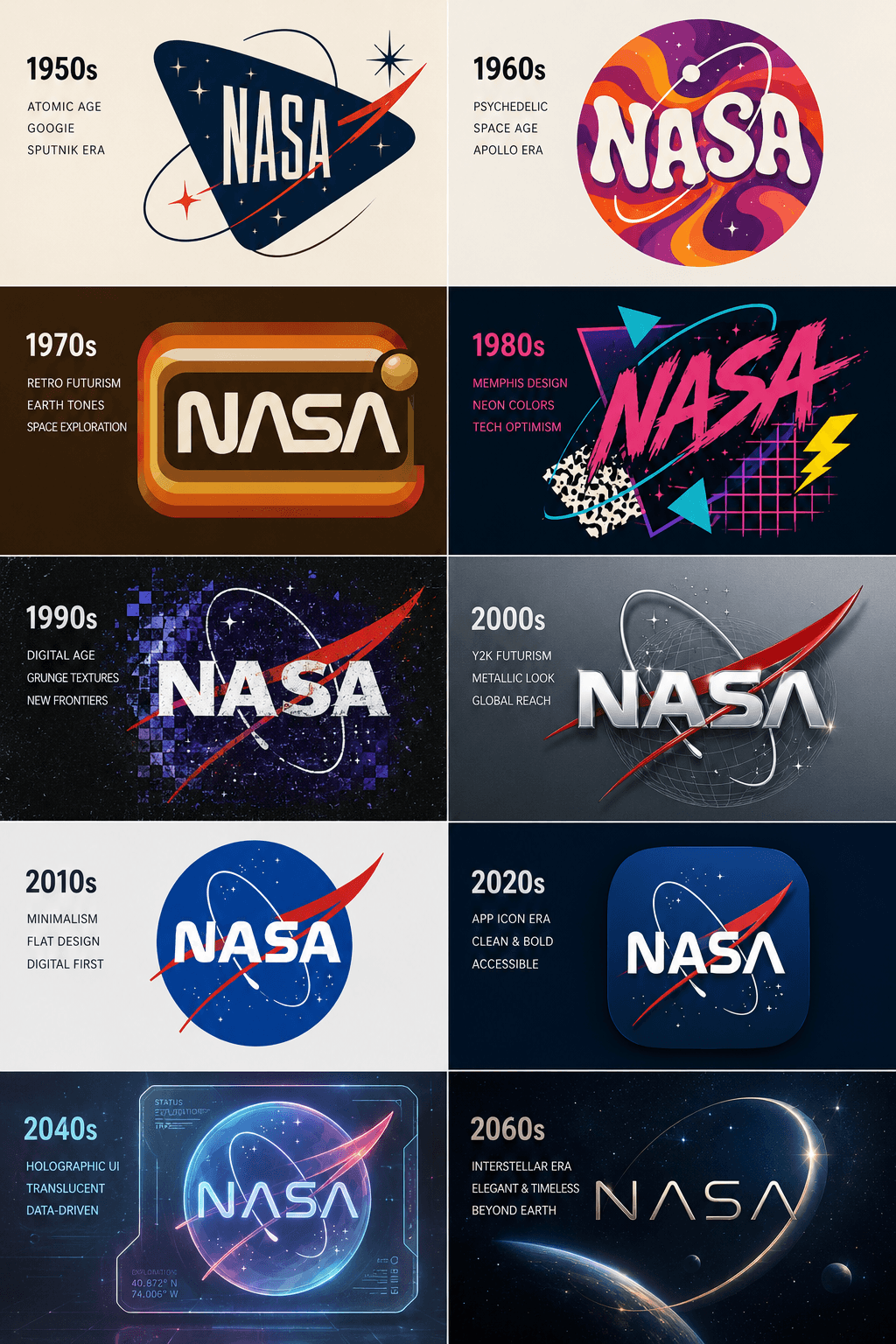
What if NASA redesigned their logo every decade? Explore this hypothetical visual journey from the Atomic Age to the Interstellar Era.
Drive visitors into recruitment pipelines, events, and programs.
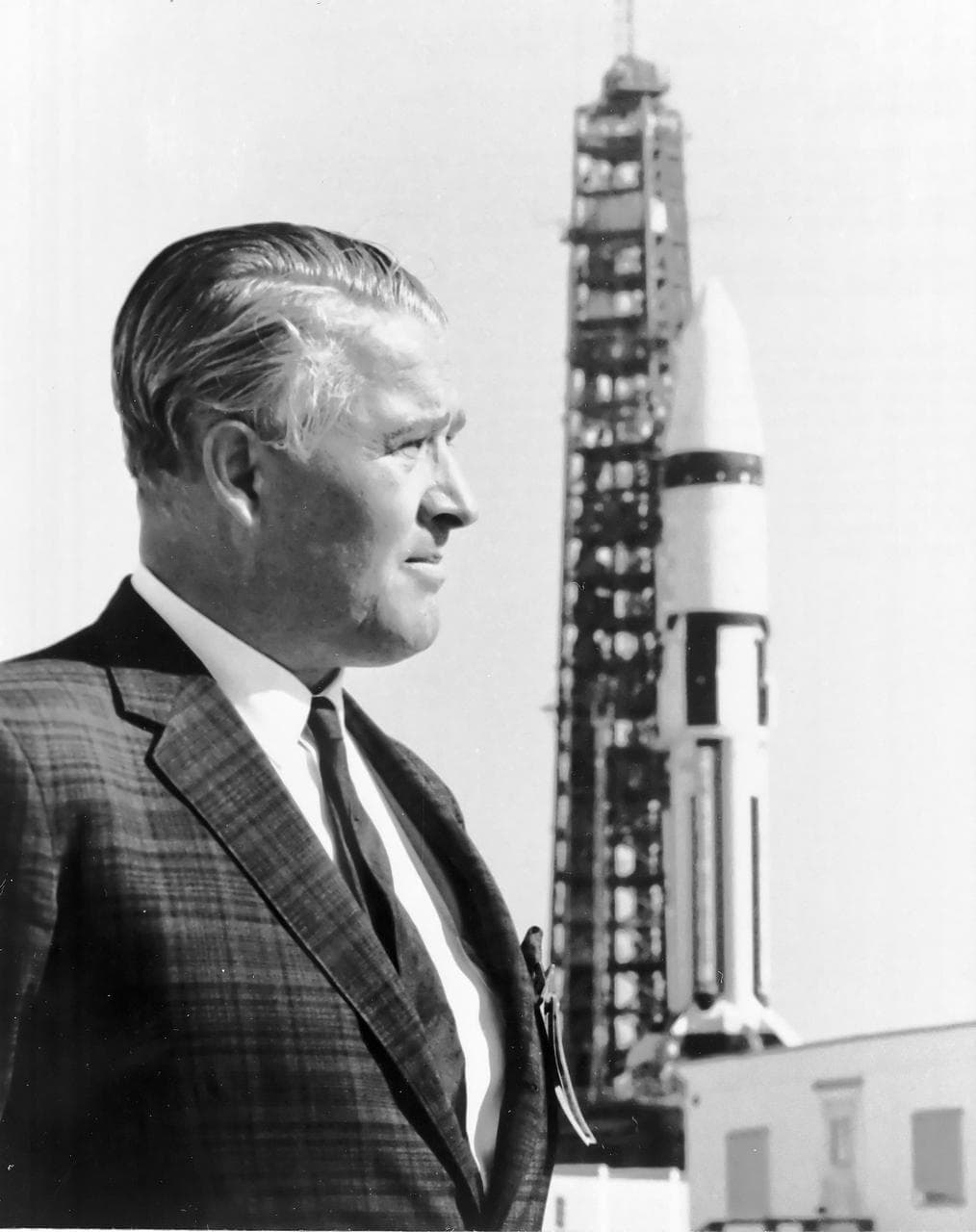
A visual history of Wernher von Braun’s central role in Explorer 1, Marshall, and Saturn V—told alongside the Nazi past and forced labor that cannot be separated from his legacy.