Space for ordinary people
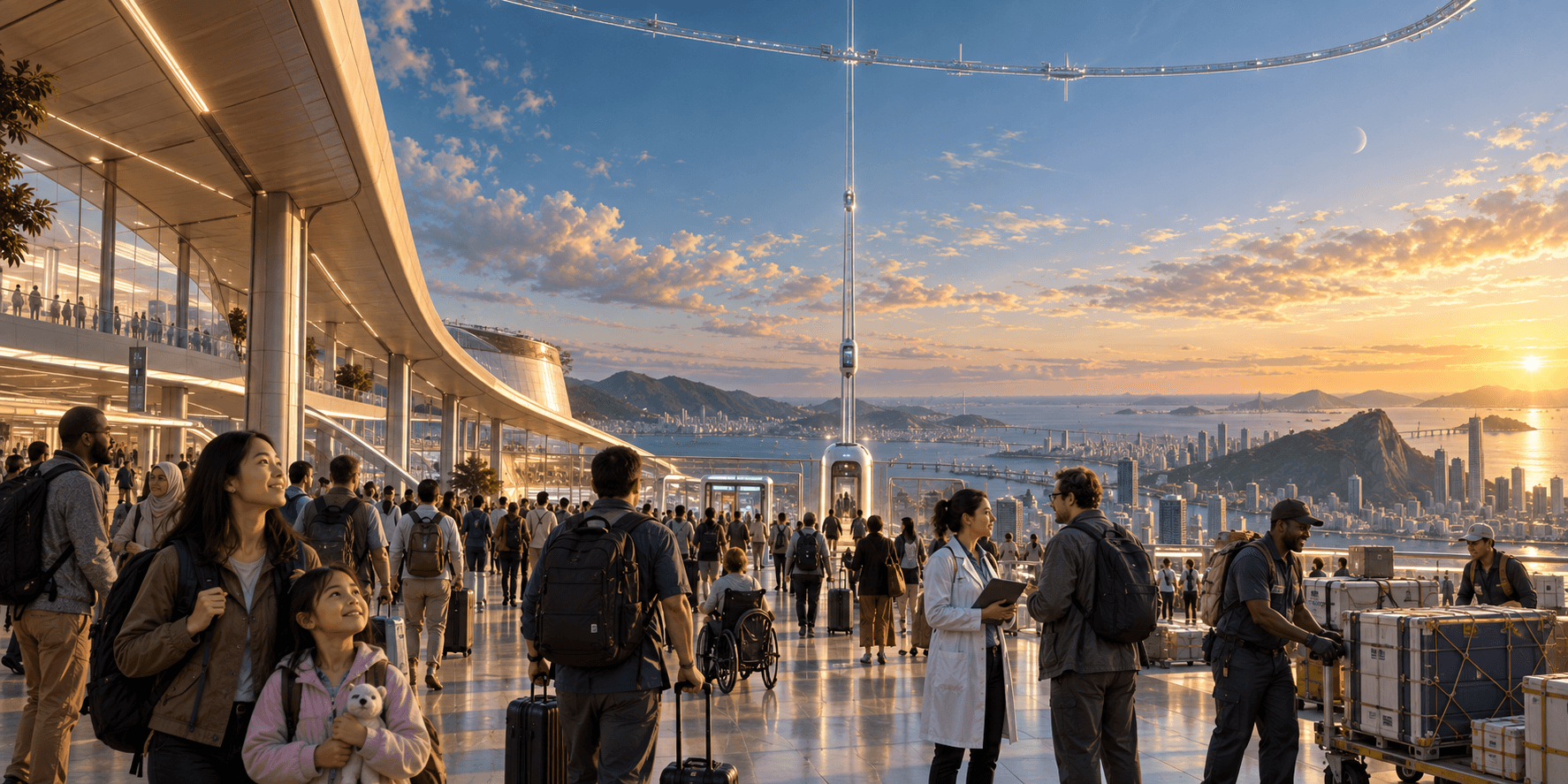
Electric climbers could replace the violent first minutes of a rocket launch with controlled rail-like travel to a platform above most of the atmosphere.

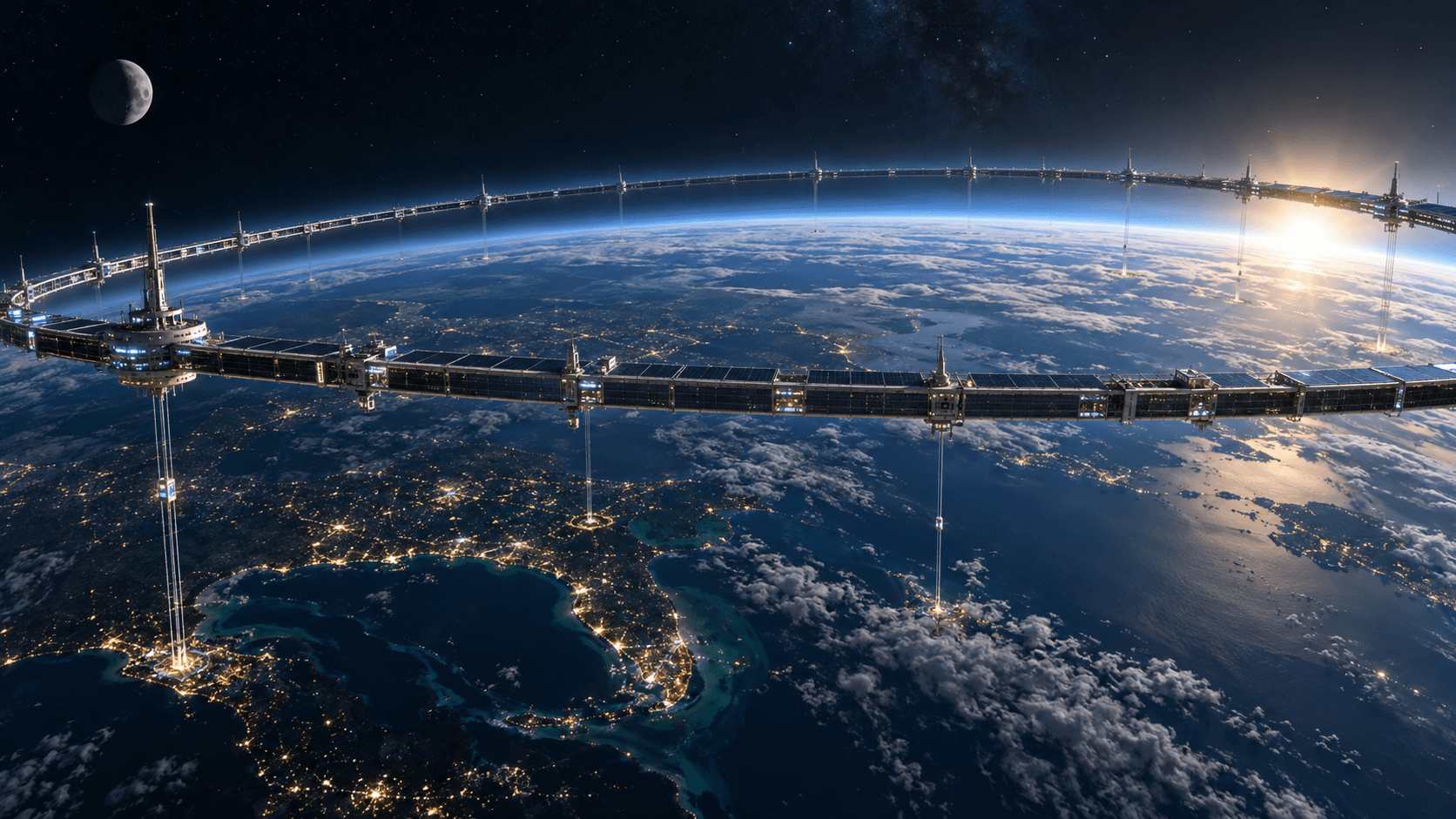
An actively supported belt around Earth could turn orbit from a destination reached by rockets into a transportation layer used by everyone.
An orbital ring separates two jobs. A fast inner rotor carries the momentum needed to remain aloft. Around it, a magnetically suspended outer structure can stay nearly fixed relative to the ground.
Speeding the rotor beyond ordinary orbital velocity creates surplus outward force. The stationary sheath, platforms, elevators, and payloads press inward through gravity; magnetic bearings transfer forces between the two without physical contact.
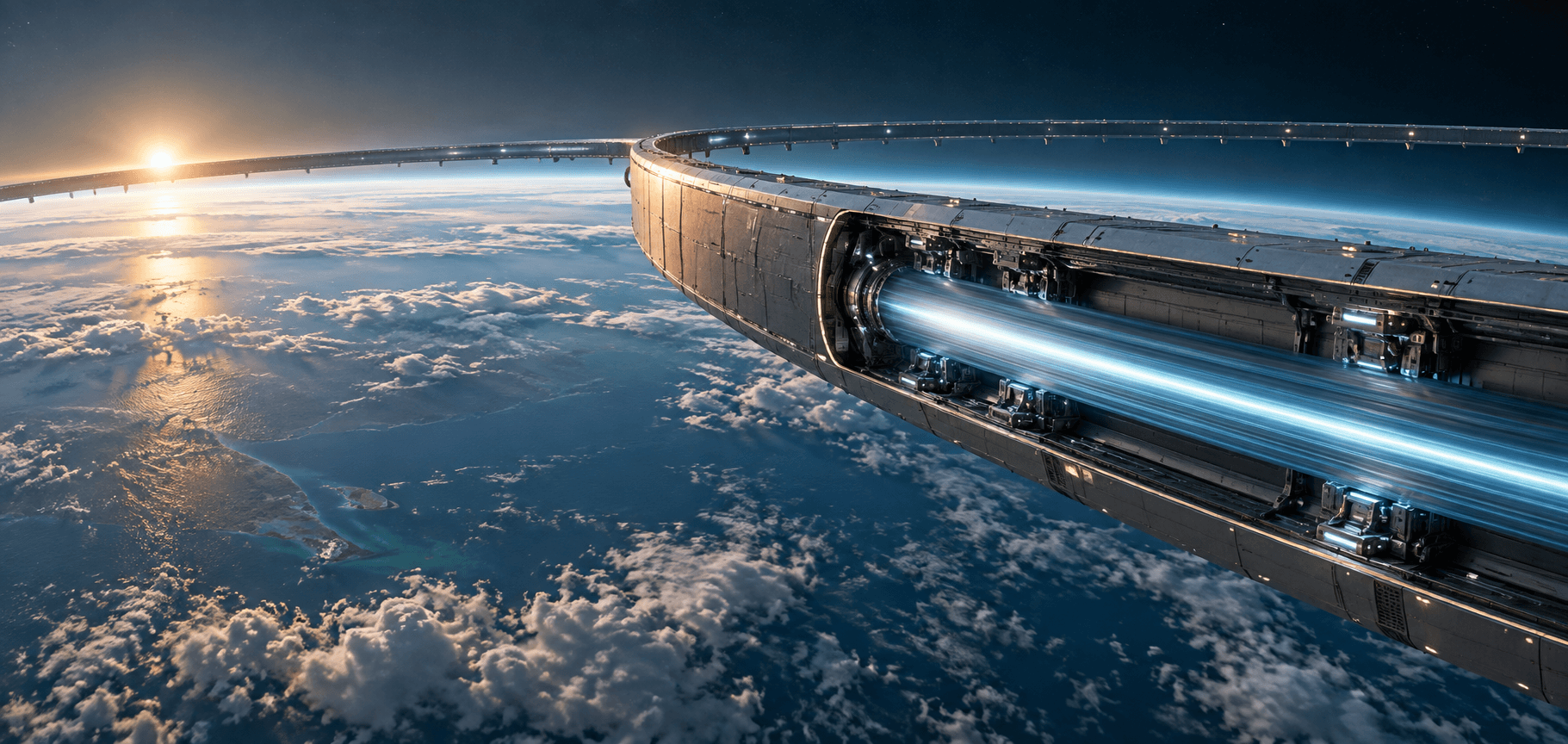
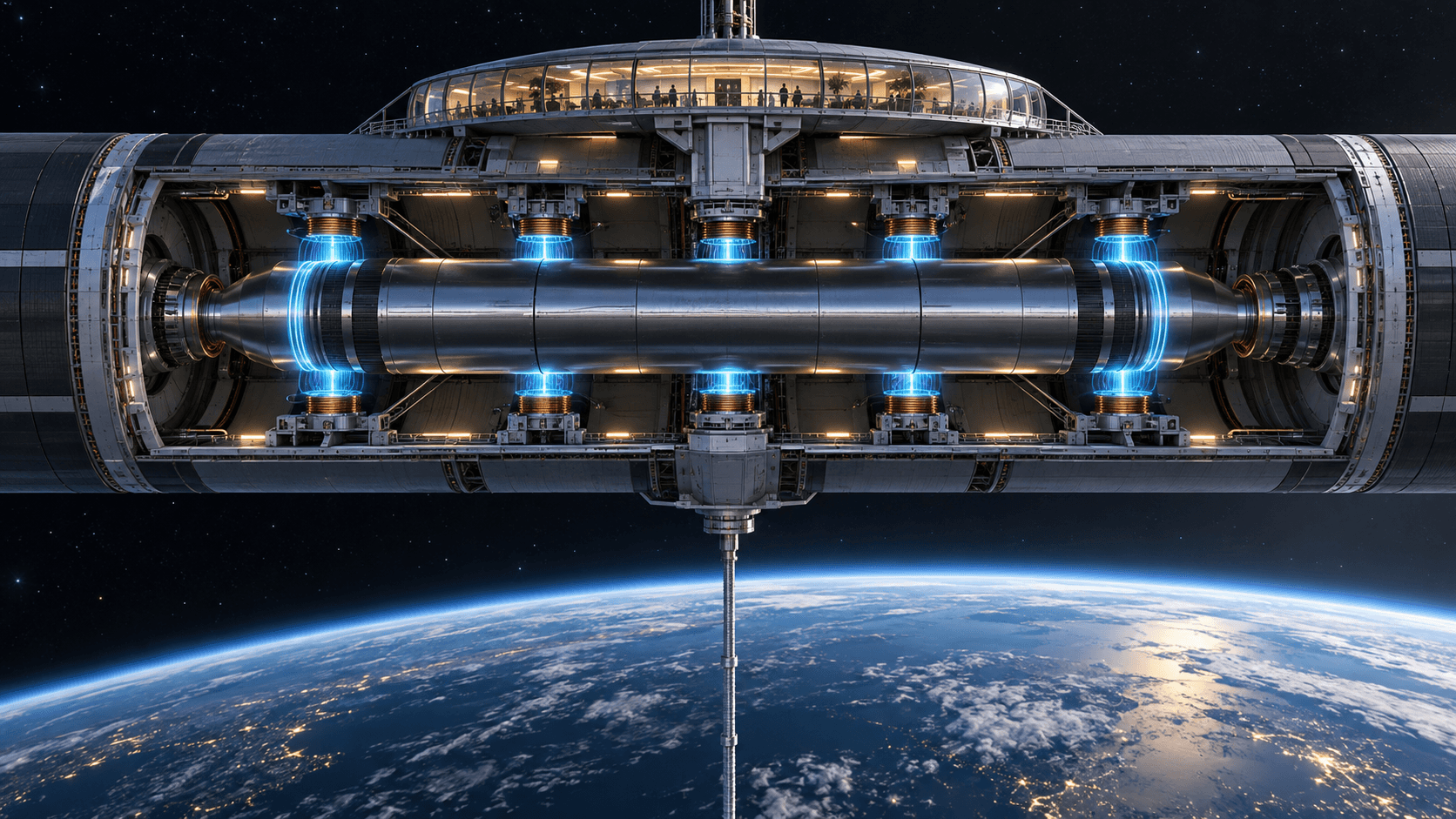 AI-generated engineering visualization
The idea does not require a magical material strong enough to hang from geostationary orbit. It substitutes continuous motion, magnetic suspension, and active control for impossible tensile strength.
Rockets move individual missions. An orbital ring would be infrastructure: a continuously available network designed to move people, cargo, energy, and information at enormous volume.
Electric climbers could replace the violent first minutes of a rocket launch with controlled rail-like travel to a platform above most of the atmosphere.
A continuous track around Earth could move passengers and freight between distant regions without requiring millions of high-thrust flights through the lower atmosphere.
Solar farms above clouds and weather could generate continuously for long periods, with power routed to the surface through tether stations.
Large-scale observation, communications, power delivery, and rapid cargo movement could strengthen early warning and emergency relief worldwide.
Low-cost, high-throughput transport could make orbital manufacturing, research, repair, recycling, and large habitats accessible beyond a handful of governments.
Higher rings and electromagnetic launch tracks could give spacecraft velocity before release, reducing the propellant needed for the Moon and deep space.
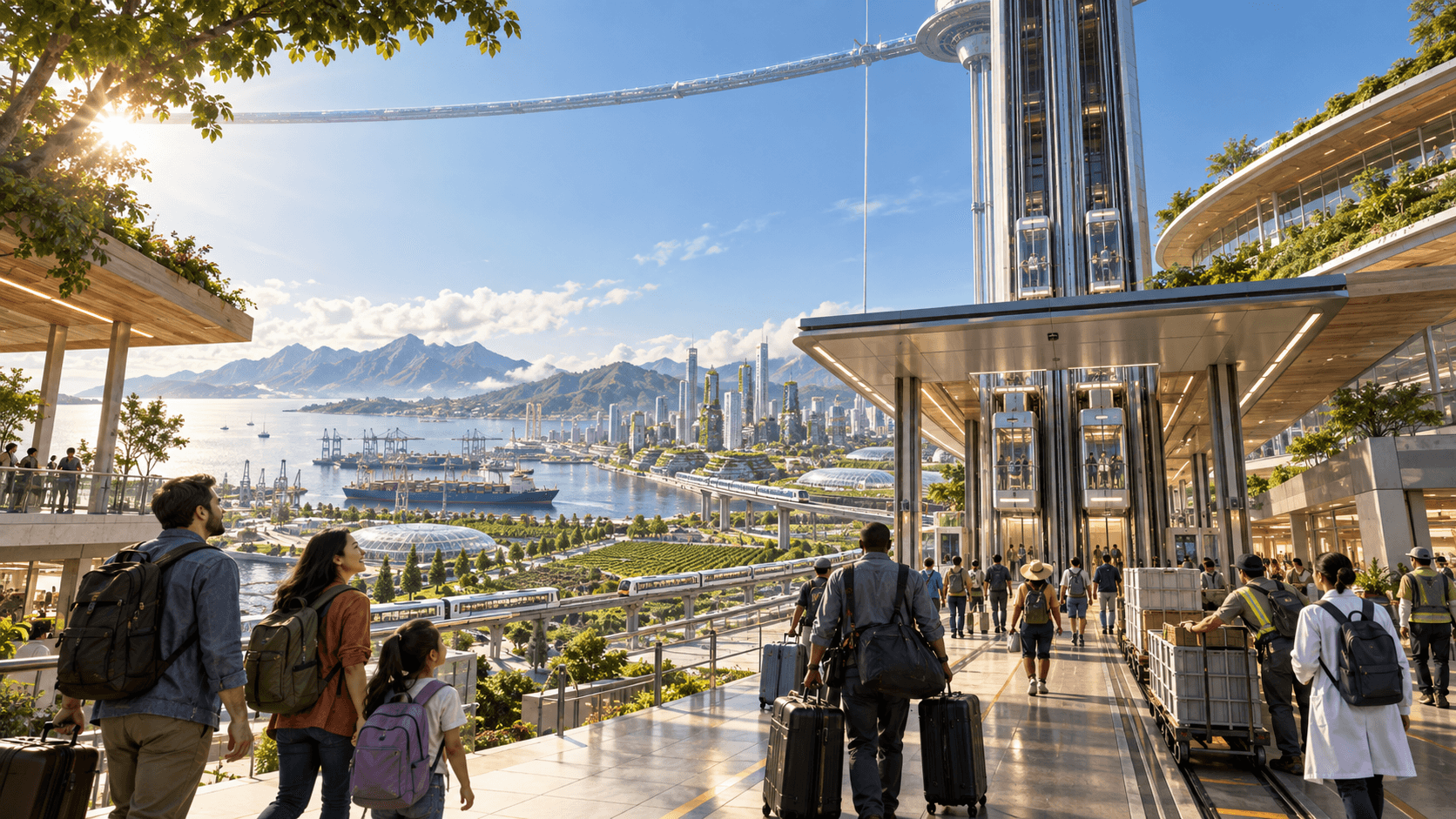
Its civilizational promise depends on broad access: interoperable stations, transparent pricing, public safety standards, open scientific use, and routes that connect regions historically left outside major infrastructure networks.
Isaac Arthur’s episode provides the conceptual foundation for this page, exploring active support, tethered transit, high-throughput launch, global travel, layered rings, and far-future extensions toward the Moon.
Watch on YouTube ↗ Watch the full episode
A station fixed over Earth is not itself in orbit. A vehicle released from it would fall. But a magnetic track running around the planetary circumference could accelerate craft gradually, using Earth’s gravity to offset part of the felt turning force.
rough low-Earth orbital speed
Earth escape speed near the surface
release toward a chosen trajectory
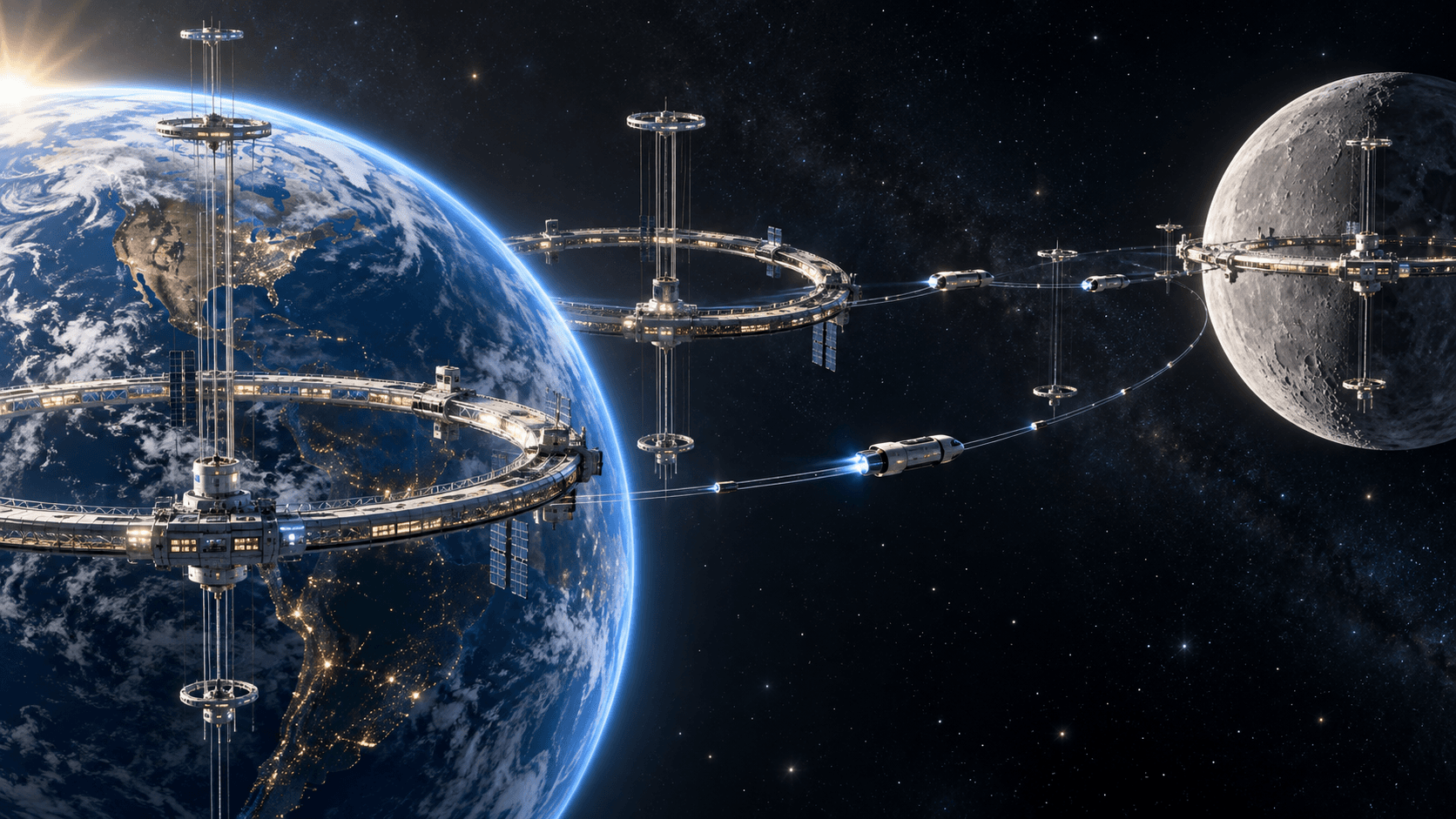
Rings at different inclinations and altitudes could exchange passengers and freight. Higher structures could add launch velocity or receive arriving spacecraft. Far-future networks might connect to lunar tether systems without demanding one impossible cable between Earth and Moon.
The concept is compelling precisely because it does not require antigravity. It still asks civilization to master a continuous machine longer than Earth’s circumference.
Even a minimal ring would require extraordinary quantities of material in orbit. The first system is the hardest; only then could cheap lift help expand the network.
This is dynamic infrastructure, not a passive bridge. Sensors, magnetic bearings, power electronics, and control systems must stabilize it continuously.
The rotor, magnetic suspension, power conversion, and surface transmission all create waste heat that must be managed at planetary scale.
A credible design needs segmentation, redundant counter-rotating elements, safe tether release, debris avoidance, and graceful shutdown modes.
Routes, stations, energy, safety rules, and pricing would affect every nation. International access and oversight cannot be added as an afterthought.
Infrastructure that crosses every longitude cannot be treated as an ordinary private facility. Its failure risks, orbital traffic rules, energy markets, ground corridors, and access policies would affect people who never board it.
The humane version would be governed like a global commons: internationally inspected, environmentally accountable, resistant to weaponization, and built with enforceable guarantees that scientific, humanitarian, and developing-world access remain part of the mission.
This page is an independent educational exploration, not a NASA proposal. It draws on Isaac Arthur’s Orbital Rings episode, Paul Birch’s foundational orbital-ring papers, and a modern techno-economic assessment of actively supported structures. Numeric examples are illustrative and depend on architecture, altitude, payload, materials, and control assumptions.