NASA publicly selected the Teleoperator Retrieval System for a Skylab reboost or controlled-deorbit mission.

The FOIA Files
CASE FILE 002 • PUBLIC ARCHIVE • CONFIRMED PLAN
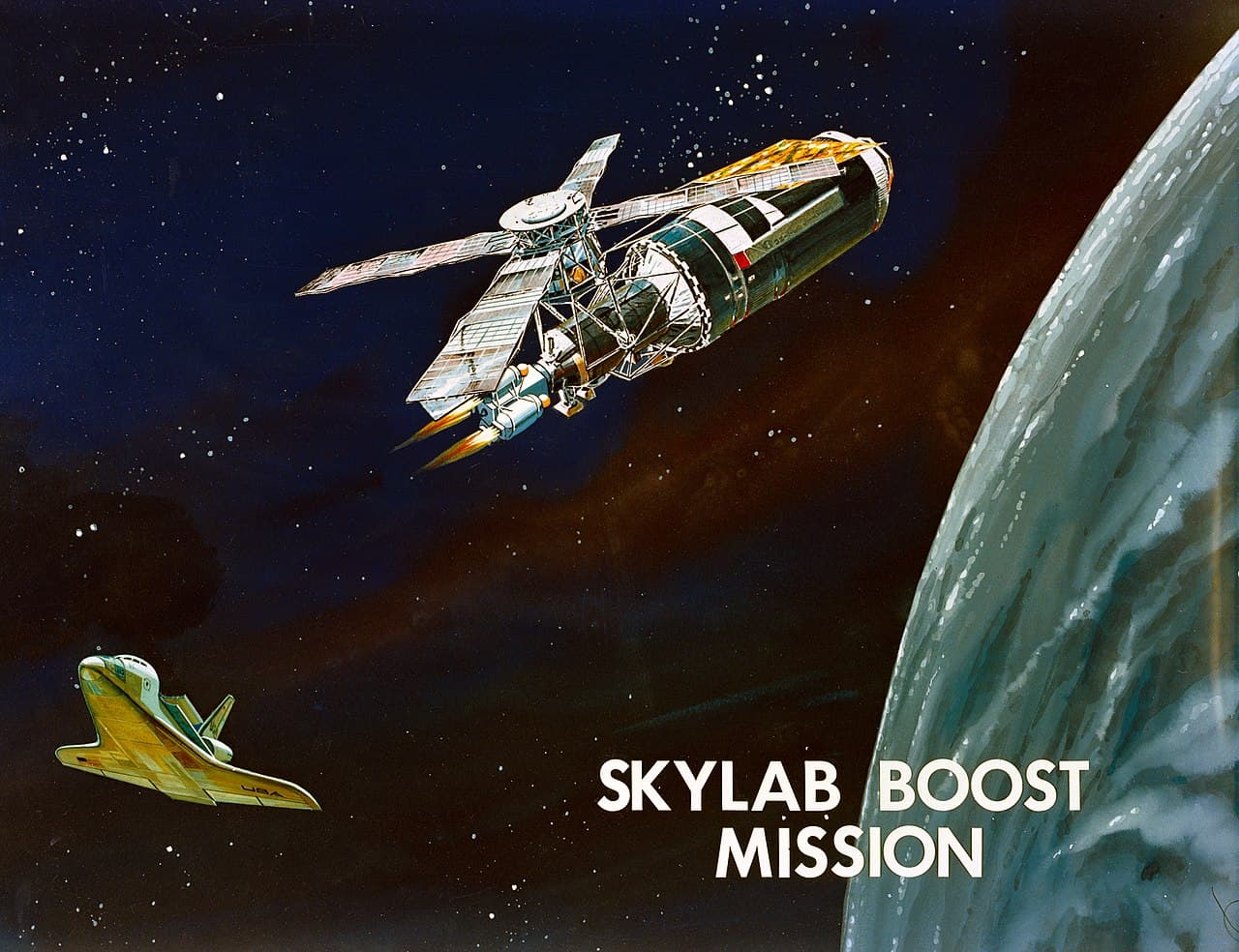
NASA concept artwork • Proposed Skylab boost mission • Public domainCould the Space Shuttle have saved Skylab?
NASA built a real plan around a remotely piloted spacecraft, an early Shuttle flight, and a race against a station falling faster than expected.
THE SHORT ANSWER WATCH THE NASA FILMNASA retrospective: Skylab at 50 • May 2023
WATCH THE NASA FILMNASA retrospective: Skylab at 50 • May 2023NASA did more than consider it. The agency studied, funded, and began preparing a rescue architecture.
“Save” had two stages: first, attach a propulsion vehicle and move Skylab into a higher storage orbit; later, send Shuttle crews back to inspect, refurbish, and reuse the laboratory. The concept was technically serious. It failed because the rescue vehicle and the Shuttle could not become operational before Skylab's shrinking orbital lifetime expired.
THE DOCUMENTARY RECORD
Four pieces of evidence turn a proposal into a program.
A $32 million development contract called for flight hardware delivery in September 1979.
Controllers reactivated Skylab, verified surviving systems, and changed its attitude to extend orbital life.
A contractor study defined refurbishment kits, crew operations, payloads, and a path back to an occupied laboratory.
THE MACHINE
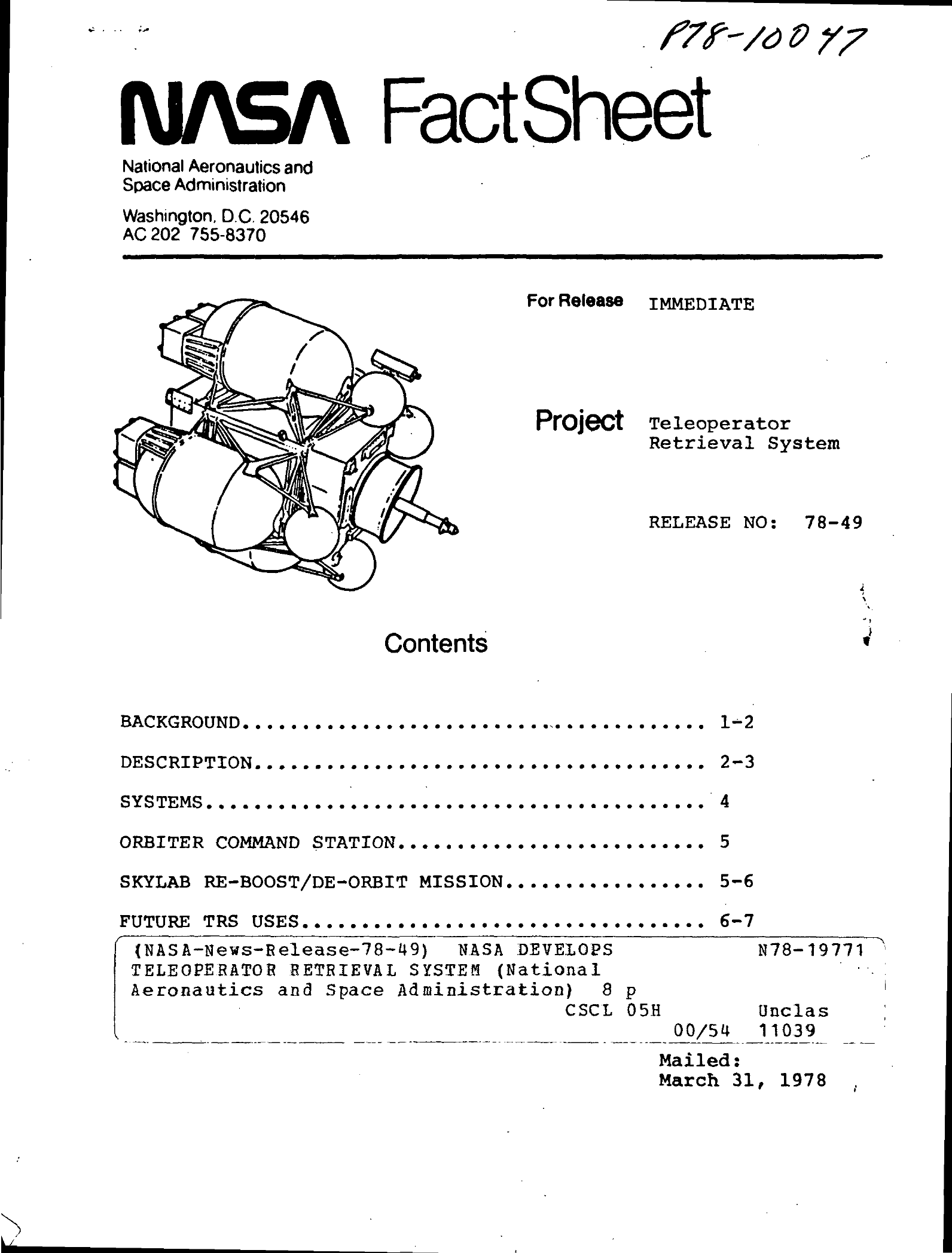
A remote-controlled tug launched from the Shuttle.
The Teleoperator Retrieval System was not meant to haul the 169,000-pound station into the Shuttle. It was a reusable free-flying propulsion vehicle. An astronaut could steer it from the orbiter using television images, dock it to Skylab, and command a long burn.
10.5 ftdiameter
11 ftheight
2TV cameras
6-DOFattitude control
NASA's design used a central hydrazine propulsion core, optional propellant tanks, autonomous instructions, and manual Shuttle control. Its broader purpose included satellite inspection, stabilization, delivery, and retrieval.
DEPLOY
Release the TRS from an early Shuttle's payload bay.
RENDEZVOUS
Fly remotely toward Skylab using onboard guidance and television.
DOCK
Attach at the station and establish a stable combined configuration.
DECIDE
Raise Skylab for later reuse—or command a controlled Pacific reentry.
THE CLOSING WINDOW
Engineering advanced. The calendar collapsed.
Skylab 4 raises the station to a 269-by-283-mile orbit before the final crew departs.
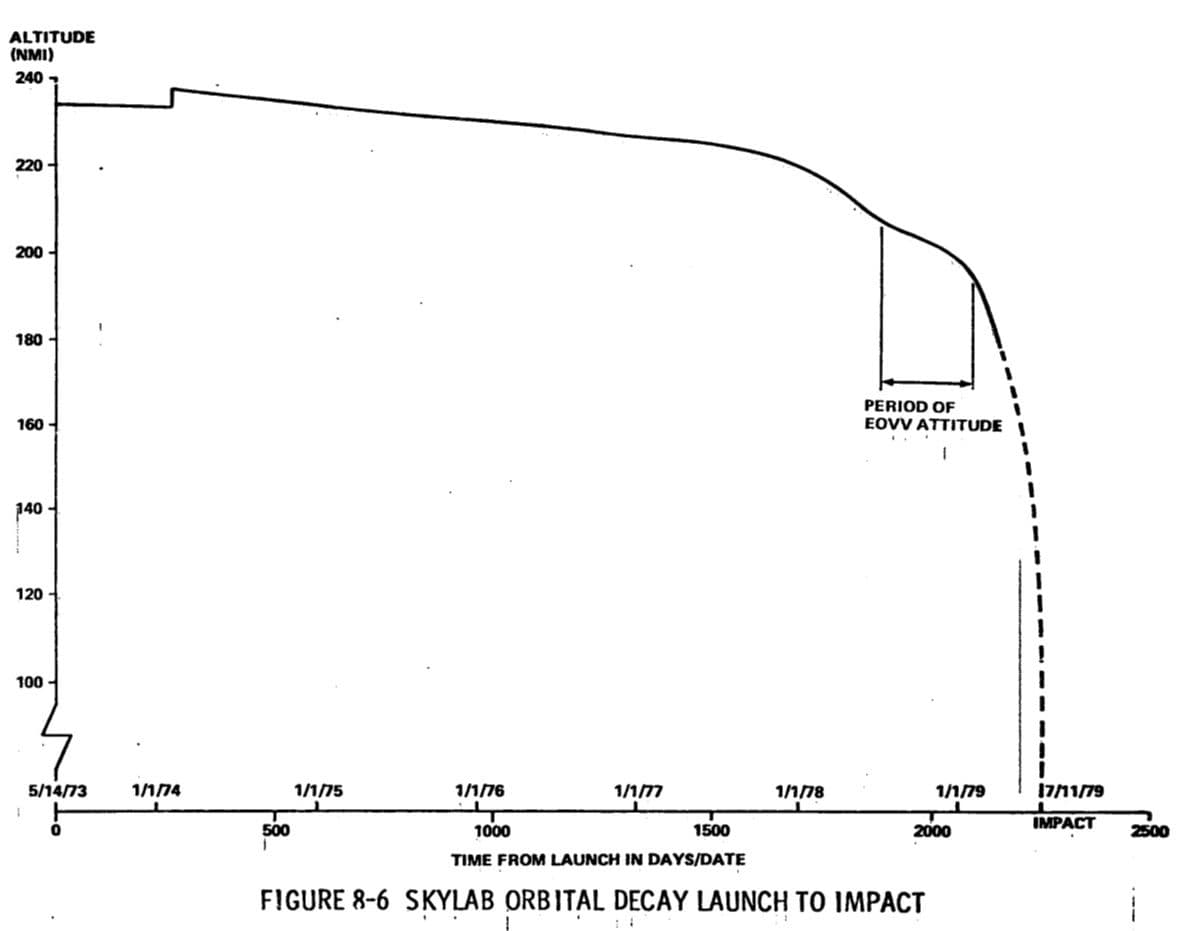
Unexpected solar activity accelerates orbital decay; the projected lifetime collapses toward 1979.
Controllers wake Skylab after four dormant years and place it in a lower-drag attitude.
NASA awards Martin Marietta a $32 million contract to develop the Teleoperator Retrieval System.
NASA cancels the reboost/deorbit mission after the station, Shuttle, and teleoperator schedules no longer align.
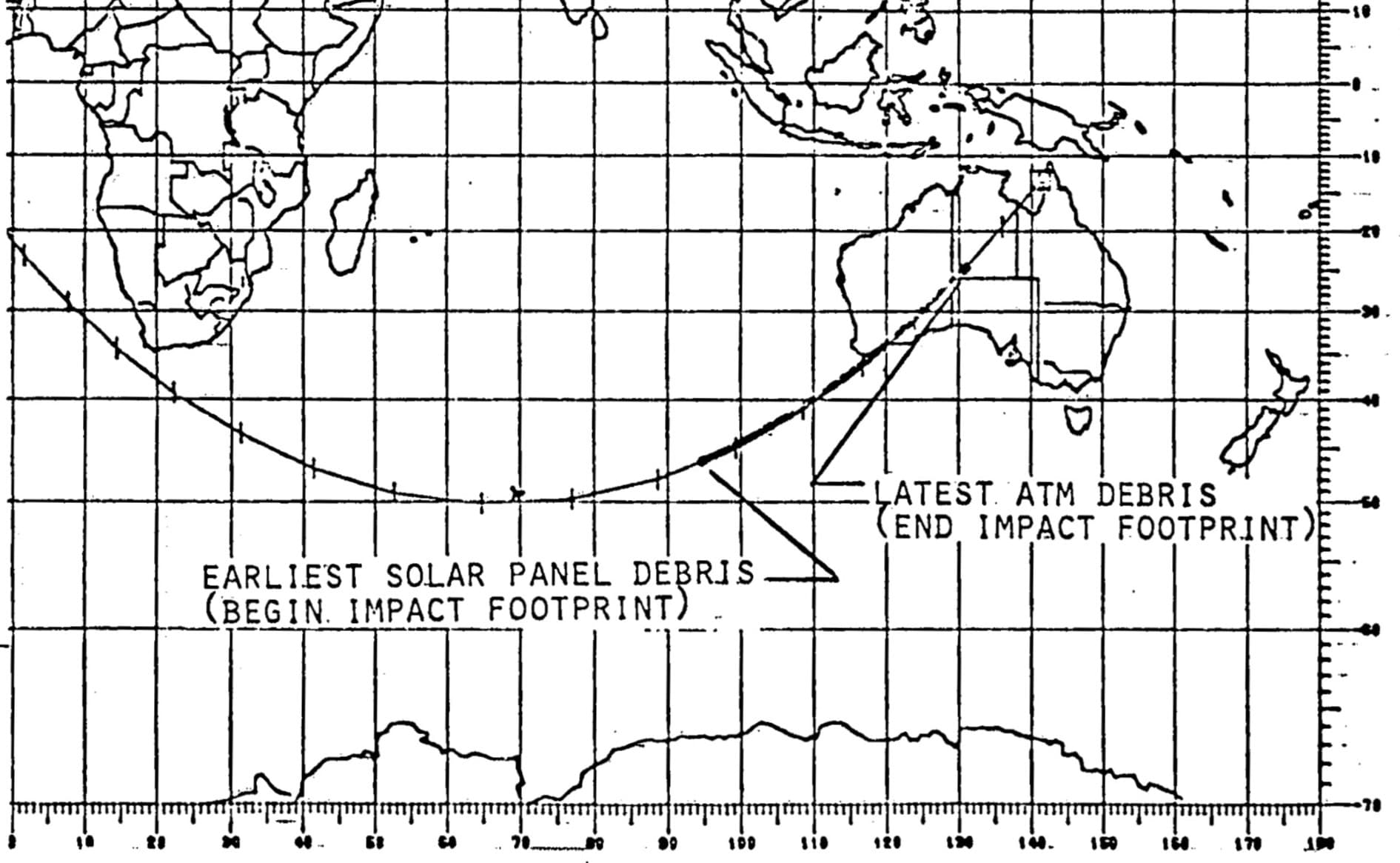
Skylab breaks up over the Indian Ocean; debris reaches Western Australia.
THE SCHEDULE THAT COULD NOT CLOSE
CANCEL
DEC 1978SKYLAB FALLS
JUL 1979TRS DELIVERY
SEP 1979STS-1
APR 1981
DEC 1978SKYLAB FALLS
JUL 1979TRS DELIVERY
SEP 1979STS-1
APR 1981
WHY IT FAILED
The rescue hardware was due after the station was gone.
NASA's July 1978 contract targeted September 1979 for delivery of the flight hardware. By December, managers judged success unlikely because of uncertainties in Skylab's systems and lifetime, the Shuttle schedule, and TRS delivery. Skylab reentered two months before that hardware date. Columbia did not make the first Shuttle flight until April 1981—twenty-one months after Skylab fell.
WHAT “SAVED” MEANT
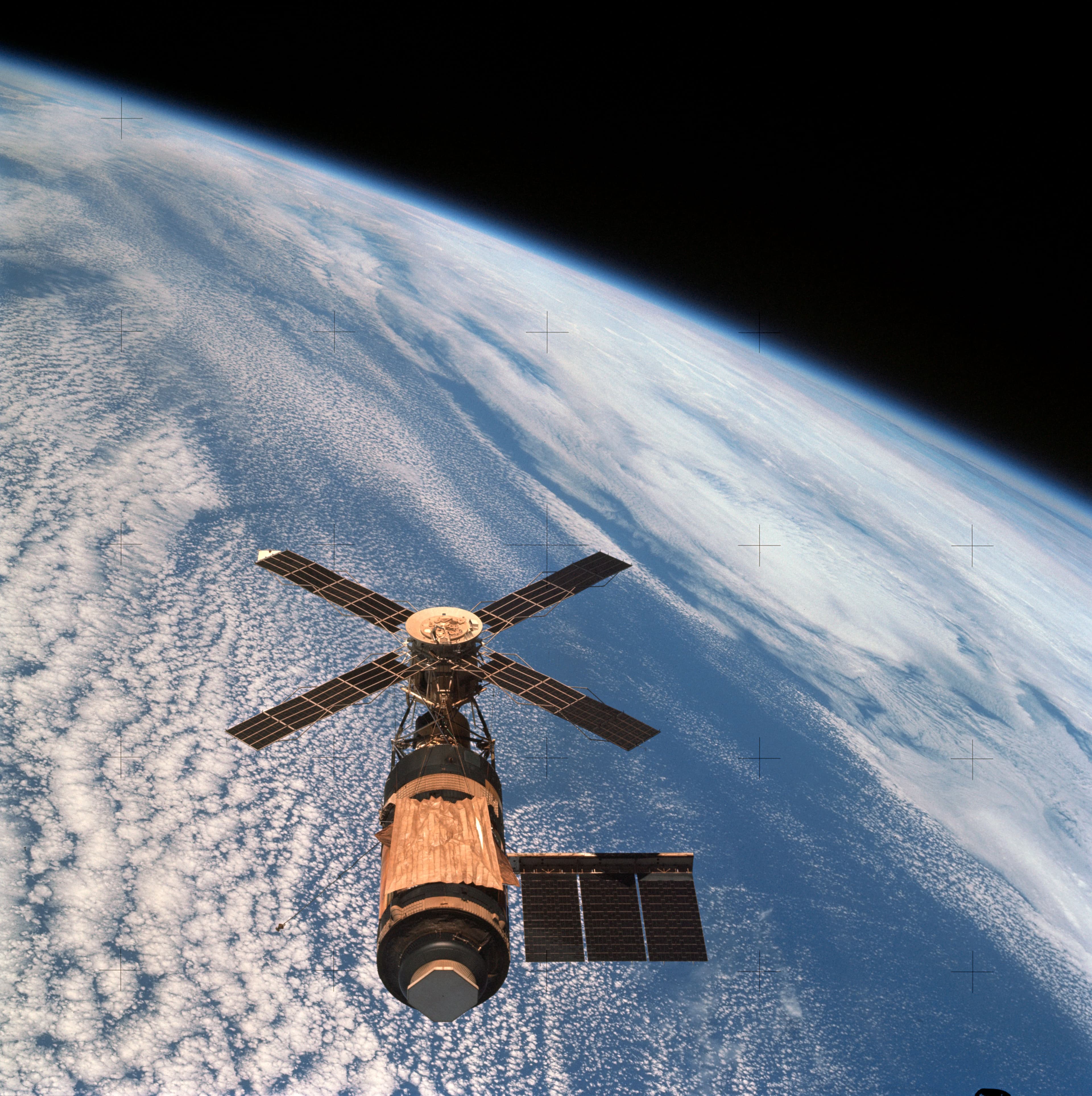
Not just preventing a crash—putting America's first station back to work.
McDonnell Douglas's eleven-month reuse study examined every major workshop subsystem, defined refurbishment and resupply kits, and proposed a Shuttle-tended rehabilitation phase. The concept treated Skylab as extra habitable volume for long Shuttle missions, with private quarters, exercise facilities, and existing experiments available to a visiting crew.
Important obstacles remained. Skylab's docking system was built for Apollo, its communications needed replacement, aging systems required inspection, and the first Shuttle visits would have been rehabilitation missions—not an immediate return to routine occupation.
Read NASA-CR-161187 ↗THE UNSEEN ADVERSARY
Solar activity heated the atmosphere and pulled Skylab down.
Skylab's original lifetime estimates depended on forecasts of the Sun's 11-year activity cycle. Stronger-than-expected activity heated and expanded the upper atmosphere, increasing drag hundreds of miles above Earth. NASA's orbital analysis notes that long-range solar-flux values could not be predicted with acceptable confidence.
Reorienting the station into the End-On-Velocity-Vector attitude reduced drag and added an estimated 3.5 months. It was an impressive intervention, but not enough to bridge the widening schedule gap.
CASE ASSESSMENT
What the archive establishes—and what it does not.
The reboost/deorbit plan, TRS development contract, on-orbit reactivation, and Skylab reuse studies are documented in public NASA records.
No Shuttle launched toward Skylab, no TRS docked with it, and the first operational rescue objective was never demonstrated in flight.
NASA called it a retrieval system, but the plan did not involve returning Skylab to Earth. The TRS itself was intended to be recoverable and reusable.
The plan was credible enough to fund and develop. It was not close enough to operational readiness to beat the orbital-decay clock.
THE FINAL ORBIT
NASA could influence where Skylab fell—but could no longer save it.
Controllers used attitude changes to select a final orbit that passed mostly over water, then commanded a slow tumble. Skylab broke apart lower than predicted, extending the debris footprint into sparsely populated Western Australia. No injuries were reported.
This independently researched case file is not a new FOIA request or a NASA determination. It is based on publicly available government records: NASA's Skylab reentry history; the March 1978 Teleoperator Retrieval System announcement; the December 1978 Skylab Reuse Study; the reuse-study appendixes; NASA's orbital lifetime and decay analysis; the official 1978 chronology; and NASA's STS-1 mission record. Contemporary plans are described as plans, not as completed flight operations.